BAJA FITNESS & MAC DIET PROGRAM


Photograph was taken in April of 2026 before we hosted a classic car and airshow at our hangar for Memorial Day to honor our Veterans families.

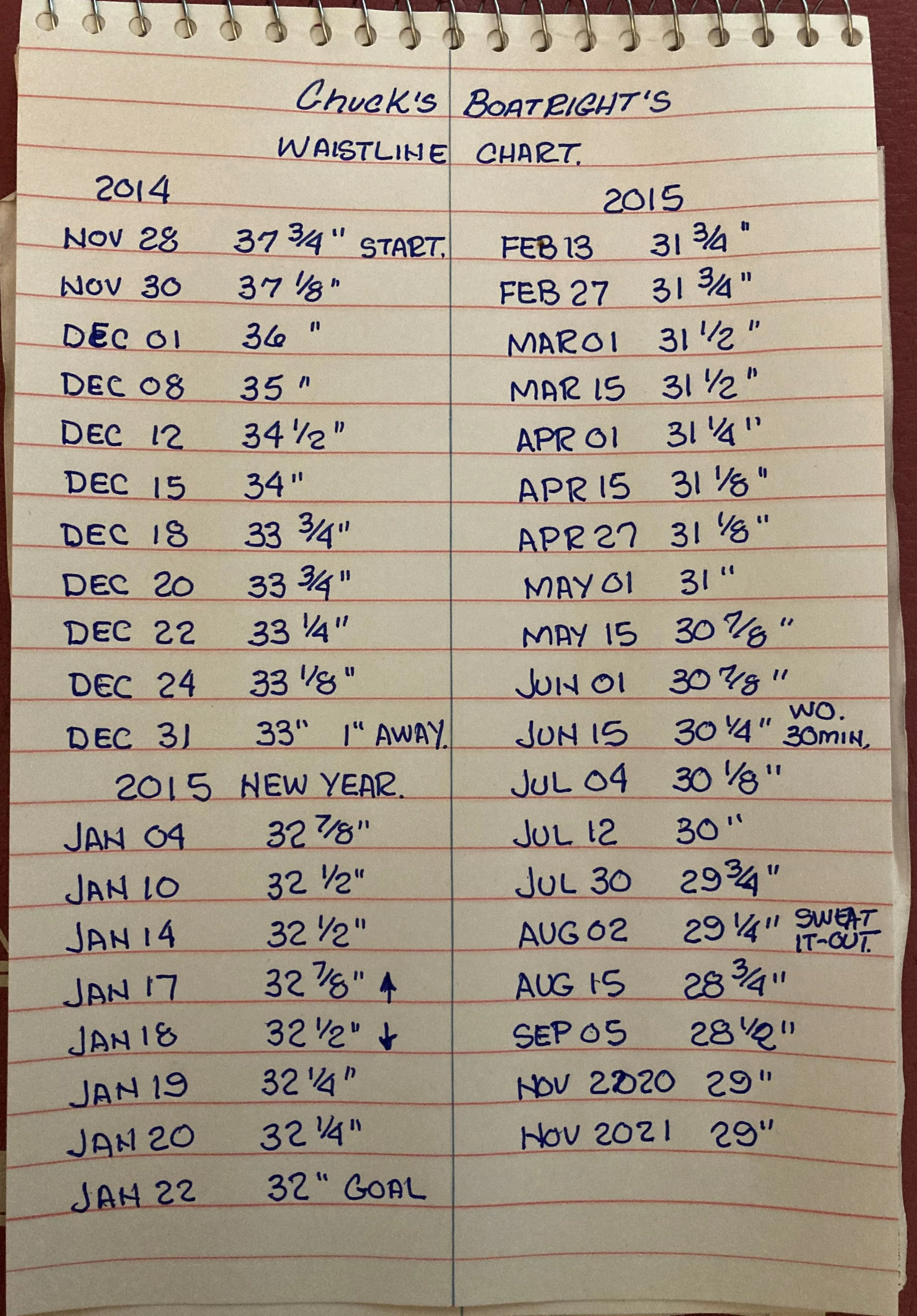
This photograph was taken before I started my MAC Diet on December 01, 2024, where I had a 37.75- inches waistline. Believe me it was difficult to have this photograph taken and look at; but gave me the incentive that I needed.

This photograph was taken on May 01, 2015, when I reached my waistline objective of losing from 37.75- inches down to 31.00- inches. That is losing 6.75- inches in 6- Months that better than what GLP-1 injections can provide. I lost 52 lbs. in 6-months.
The BAJA Fitness & MAC Diet Program, written and developed by Charles W. Boatright, is a practical system for fat loss, muscle building, and natural anti-aging. It is aimed at people of all ages, especially those over 60, and treats nutrition as about 80 percent of results, with training and an active lifestyle making up the rest. Keep in mind you cannot out work your diet. Anyone that made New Year’s Resolution find this out within 6- weeks.
Boatright, a chemical engineer by background, developed the plan after hip surgery in 2014, when he needed to lose substantial weight (52 lbs.) and inches (9.0- inches). He presents his own results as evidence: rapid early losses of dozens of pounds and several waist inches, later maintained for years at a 29.5-inch waist into his late 60s, along with no prescribed medications and a more youthful appearance.
BAJA is described as Bulldog (or Basic) Athletic/Anabolic Juggernaut training that is age-defying. Workouts include typically stretching, cardio, and strength training, often using AMRAP (as many reps as possible) methods. Strength work is emphasized because added muscle can raise daily calorie burn and because resistance training is said to stimulate natural growth hormone that contains collagen, supporting skin repair and body composition from within. The reason that strength training is emphasized is that strength training provides up to a 6- hour afterburn, where cardio only provides up to one hour afterburn of calories.
Boatright recommends at least four workout sessions a week and notes the approach is useful for women as well as men. Progress is tracked with a tape measure as much as a scale, with a healthy waist often framed as roughly half of height.
MAC stands for Macronutrient Diet that was developed in the early 1970’s. It rests on two rules: WHAT to eat and WHEN to eat. Meals are limited to a window of about 9 a.m. to 6 p.m., aligned with circadian rhythm so the body can repair overnight. “What” is determined by reading and using nine data points from the standard nutrition labels.
Using nine data points, a person calculates a MAC Score and aims for foods at or below 3.50 (closer to 1.0 is better). Preferred foods are higher in protein, fiber, omega-3/6/9 fats, and complex carbohydrates, with sugar limited to natural fructose. Added sugars, simple carbohydrates (starches, the “hidden sugars”), ultra-processed foods, and soft drinks are avoided.
Boatright argues these choices support natural GLP-1 signaling so food is used for energy rather than stored as fat, and he links the pattern to a better waistline, blood sugar, overall metabolic numbers, and even more significant, that is age-defying where he is shown on the cover of the book at age 68.
The program is packaged as a book available on Amazon on Kindle in E-Book and paperback editions. It stresses simple tools already at hand: labels, a calculator or phone, photos for visual incentive, and measurements.
Boatright frames the method as VIPER—Visual, Incentive, Process, Evaluation, Results—to work around the body’s self-preservation instincts rather than relying on willpower alone.
Related titles from the same author apply similar ideas to golf, style, and age-defying lifestyle. As with any diet-and-exercise plan, individual results vary, and medical advice is appropriate before major changes. The core claim is sustainability: decipher labels, eat in a defined window, lift and move consistently, and treat fitness as long-term body composition rather than a short-term fad.