The Outreach of a Church using Sports that had Generational Impact
From the moment the Pilgrims landed in what would become America, the church served as the primary schoolhouse for their children. Literacy meant the ability to read Scripture, and moral formation was inseparable from academic instruction. This pattern held through the late nineteenth century, when one-room schoolhouses still educated entire communities under the informal or formal oversight of local congregations.
Even the religious institutions established the Ivy League colleges—Harvard, Yale, Princeton, Columbia, Brown, Dartmouth, and Pennsylvania—were founded or deeply shaped by religious bodies.
Harvard’s original rules directed students to consider the chief end of life as knowing God and Jesus Christ; Princeton and Yale arose from Presbyterian and Congregationalist efforts to train ministers and leaders. Religious conviction was not an add-on; it was the foundation.
That foundation eroded sharply after the 1960s. Court decisions removed organized prayer and Bible reading from public schools, while broader cultural and policy shifts under the Johnson administration and beyond accelerated the separation of religious influence from publicly supported education. There is no such wording in the U.S. Constitution of separation of Church and State. It doesn’t exist.
The result has been a system increasingly detached from the moral and intellectual traditions that once underpinned it. Significant evidence, both historical and contemporary, shows that churches still exert a powerful positive influence on the education of children and teenagers.
Yet many congregations missed a strategic opening in the 1960s and later decades. Instead of pooling resources to establish or expand community schools, numerous groups poured energy and capital into ever-larger mega-church facilities.
Coordinated church-based schooling could have created locally accountable alternatives rooted in shared values, potentially mitigating the academic and behavioral struggles that have plagued segments of the public system.
Some churches have found another route that still delivers measurable results: sports as a vehicle for character development, discipline, and opportunity to achieve a career.
Pastor Alyn E. Waller of Enon Tabernacle Baptist Church in Philadelphia has built one of the clearest modern examples. Enon’s athletic ministry offers football, basketball, baseball, track, soccer, martial arts, and related programs open to neighborhood youth, not only church members.
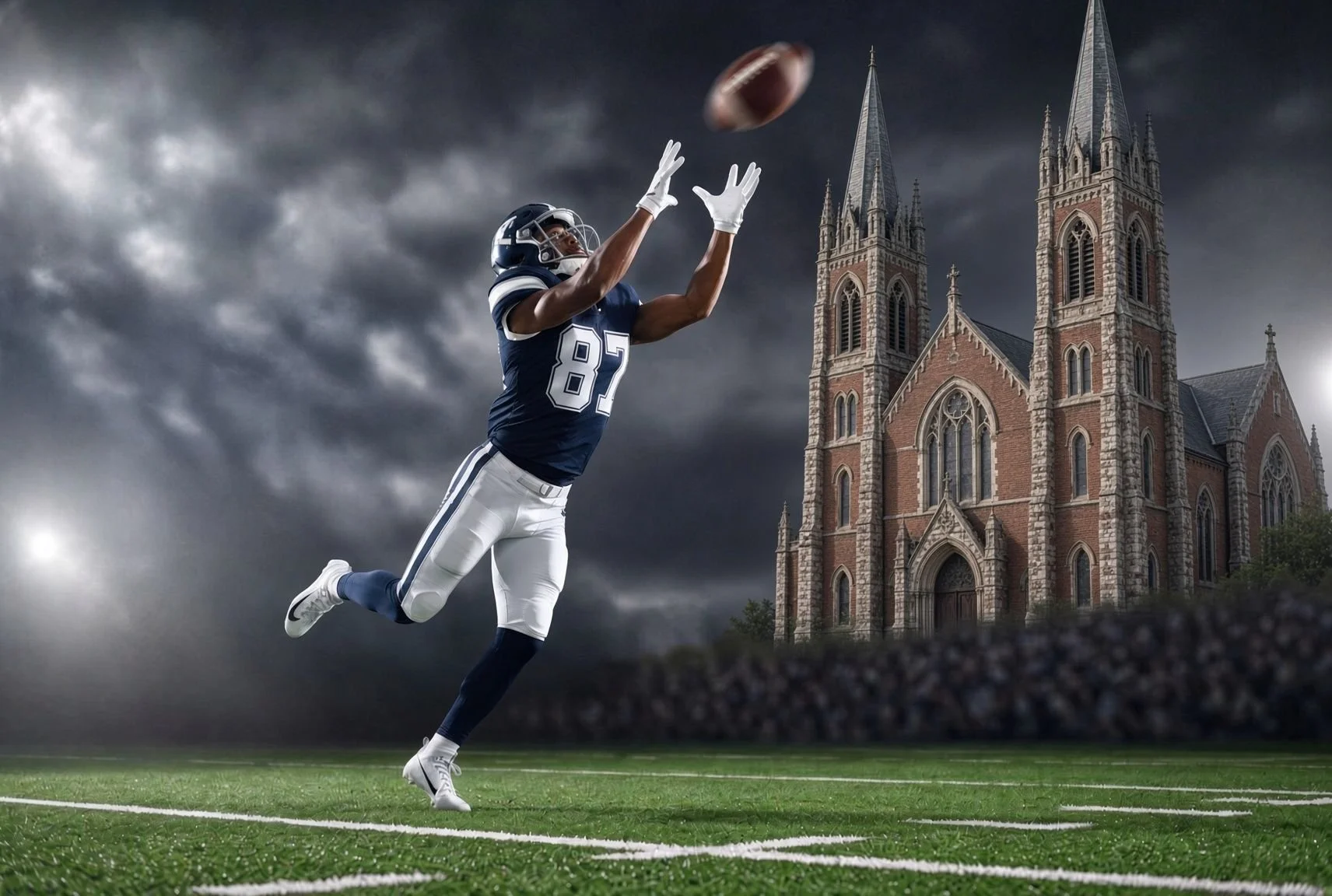
The church has invested in facilities, including a large campus with fields, and maintains low-cost or subsidized access so that participation is not limited by income.
Pastor Waller and his team emphasize more than athletic skill. Young people learn perseverance, teamwork, time management, and the habits that translate into academic progress. Alumni have earned college scholarships, athletic and academic, and a number have reached professional levels; many more have used the same discipline to pursue trades and other careers that generate stable income and generational wealth.
The program has touched thousands of children over nearly two decades, pairing athletic development with mentorship and a moral framework drawn from the church’s teachings.
Pastor Waller athletic program provides sports to homeschooling students and social structure that would not have. Homeschool students, educated in an autodidactic setting that allows individualized pacing and parental oversight, consistently outperform their public-school peers on standardized measures.
Church athletic programs give these students structured team experiences, social interaction, and coaching mentoring that might not be available at home. The combination—rigorous individual learning plus collective athletic formation—produces young people equipped for both higher education and practical careers.
Rather than treating religious institutions as a threat to be minimized, policymakers and communities should recognize them as beneficial partners. The Bible still remains the most widely influential text in human history for shaping character, literacy, and a sense of purpose across ages and cultures.
When churches apply these resource through schools, mentorship, or sports, the outcomes include higher achievement, lower rates of self-destructive behavior, and expanded economic mobility.
Historical record and contemporary programs like Enon’s demonstrate that religious participation in education is not a regression; it is a resource that has already delivered enormous benefits and can do so again if deliberately included rather than sidelined.
The biggest potential that churches can have in an outreach program would be to form cooperatives (coops) with other churches and establish k-12 schools that would include a sport as well as an academic curriculum that would provide thriving communities.
Churches for decades have been looking for outreach programs to reach entire families in their community; a coop school would surpass every expectation for an outreach program that would have generational benefits.
CHECKOUT MY COLLECTION OF FAITH BASE, HEALTH & FITNESS, & SPECIAL OPS BOOKS ON AMAZON KINDLE IN E-BOOK & PAPERBACK BOOKS: