Joshua’s Gauntlet of Divine Providence:
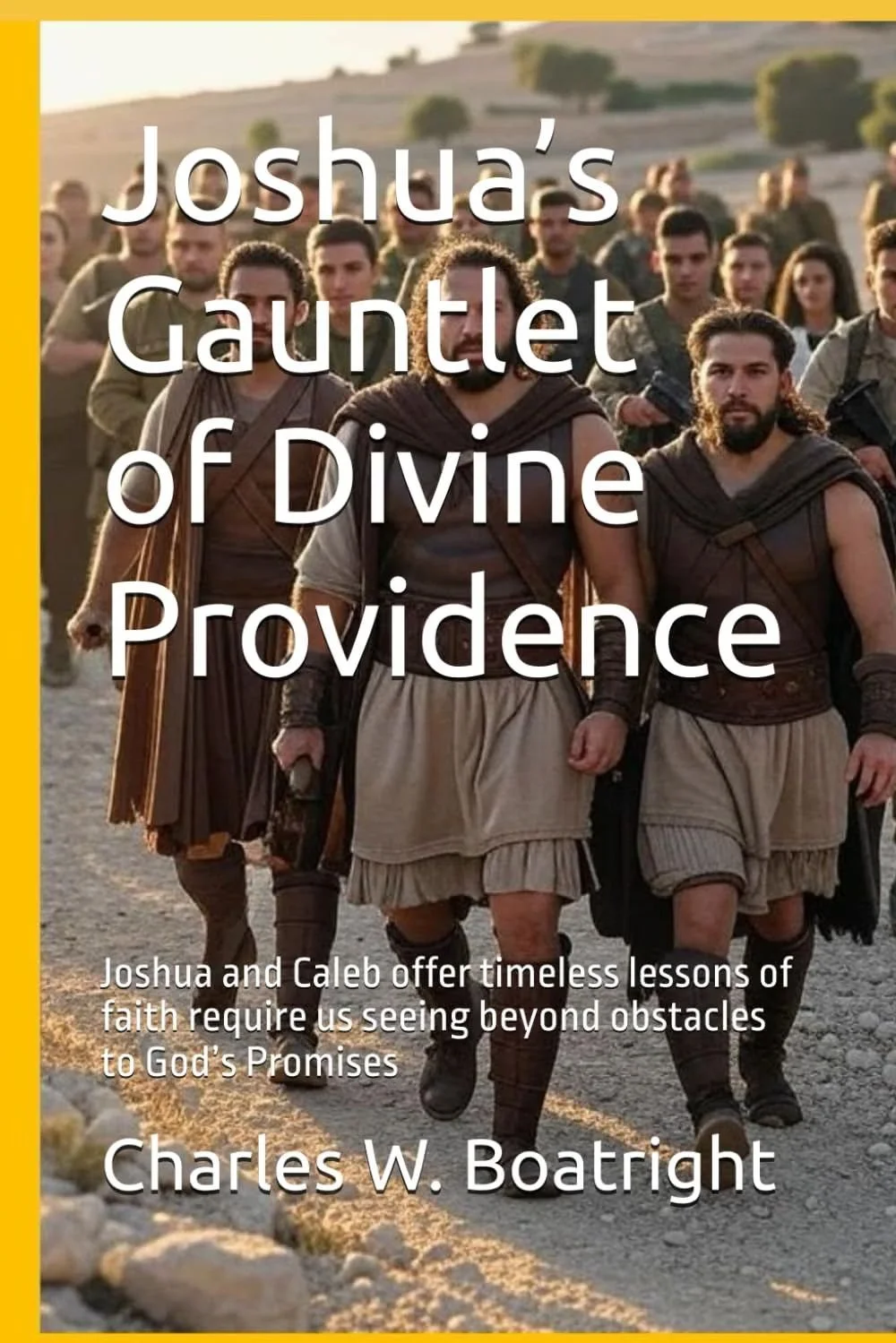
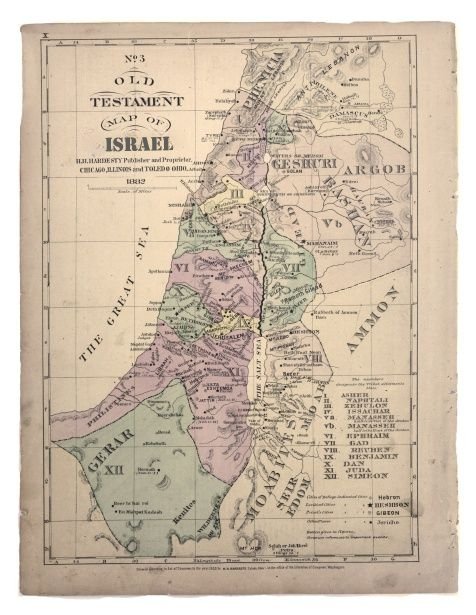
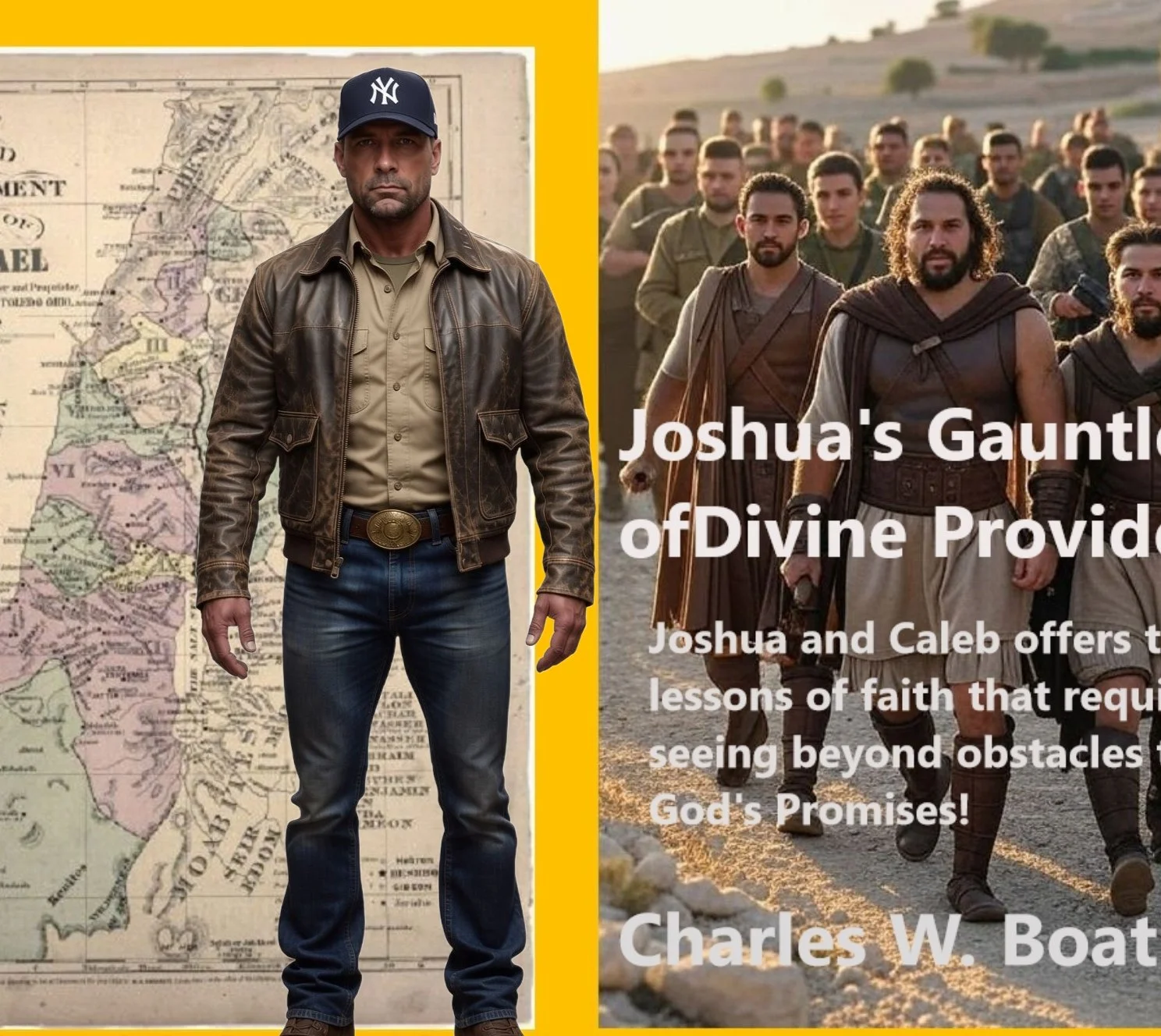
Taken at one of my book signings in Nashville, Tennessee promoting my book of the Biblical and modern-day history of Israel.
There are two verses that opponents of Israel needs to understand that was proven after May 14, 1948 listed below:
Zephaniah 3:17 God is a Mighty Warrior
The LORD your God is with you, the Mighty Warrior who saves. He will take great delight in you; in his love he will no longer rebuke you but will rejoice over you with singing.”
Amos 9:14 I will plant Israel in their own land, never again to be uprooted from the land I have given them,” says the LORD your God.
In the long shadow of the wilderness, two men stood apart from a generation that had measured the Promised Land by the height of its walls and the stature of its inhabitants. Joshua and Caleb returned from the reconnaissance of Canaan with a report that refused to give into obstacle of human fear. Where ten spies saw fortified cities and the descendants of Anak, these two saw the presence of the God who had already parted the sea and would fight their battles for them, fed a nation, and sworn an inheritance. Their difference was not optimism. It was a settled conviction that divine providence is not a distant theory but the decisive factor in every obstacle that stands between a promise and its fulfillment.
That conviction is the burden of Joshua’s Gauntlet of Divine Providence. The book takes its title from the successive trials that tested Israel between the border of Canaan and the occupation of the land: the spies’ report, the forty years of wandering, the crossing of the Jordan, the fall of Jericho, the setback at Ai, and the campaigns that followed. Each of these episodes is treated as a gauntlet—an ordeal that could crush or refine as pure strength of steel of the sword. For the majority, wilderness became a sentence.
But for Joshua and Caleb it became a forge of the Sword. The same years that wasted the generation of unbelief left these two men, at eighty-five and beyond, still strong for war and still certain that the land on which their feet had walked would be theirs.
The biblical narrative supplies the raw material. Numbers record the night the congregation threatened to stone the two faithful spies. Joshua 14 preserves Caleb’s later appeal: he had been forty when Moses sent him; he was now eighty-five, and his strength for going out and coming in remained as it had been. He asked for the hill country of the Anakim, the very giants who had melted the hearts of his contemporaries. Joshua blessed him, and Caleb drove out Sheshai, Ahiman, and Talmai.
The episode is not an isolated anecdote of geriatric valor. It is the late fruit of a decision made decades earlier to treat God’s word as more solid than visible fortifications. The book traces that decision through the intervening years and shows how a mind shaped by providence interprets delay, opposition, and personal aging not as evidence against the promise but as the means by which the promise is secured.
Readers who come to these pages looking only for historical reconstruction will find the events of the conquest carefully situated. Yet the controlling interest is pastoral and practical. The same pattern that distinguished Joshua and Caleb from the ten continues to distinguish those who inherit spiritual territory from those who merely survey it.
Obstacles remain real: cities still look impregnable, reports still circulate that magnify the adversary, and the calendar still marks years that seem wasted. The invitation is not to deny the giants but to refuse them the final word. Faith, in this reading, is the practiced habit of locating God’s presence as the decisive variable when every other variable appears unfavorable.
The later history of the people who entered the land supplies further illustration. Possession was never automatic. Covenant fidelity, leadership transitions, and recurring enemies repeatedly placed Israel back inside a gauntlet. The book follows selected threads of that longer story far enough to show that the lesson did not expire with the generation of Joshua.
What was required at Kadesh-Barnea remains required whenever a promise of God stands on the far side of an obstacle that human calculation declares decisive. The wilderness wanderings, the conquest narratives, and Caleb’s inheritance at Hebron are therefore presented not as closed ancient episodes but as a continuing curriculum in how providence operates through people who will see past the immediate barrier.
In that sense the work is both exposition and summons. It asks the reader to notice where attention habitually rests—on the height of the wall or on the character of the One who gave the promise—and to consider what changes when that attention is retrained.
Joshua and Caleb did not possess special immunity from danger. They possessed a different measure of what constitutes danger and what constitutes certainty. The pages that follow unfold that difference in detail, so that the same sight which once secured Hebron might again secure whatever inheritance still waits beyond the obstacles of the present hour.
The Modern-Day Proof of both Zephaniah and Amos prophecies:
The very next day, MAY 15, 1948, five (5) Arab counties that had standing armies attack Israel that didn’t have an official standing army on three fronts. There was no time in history that five countries attacked one country on three fronts that had a standing army, much less that didn’t have a standing Army. We need to educate our young people that are turning to the bible in large numbers to turn to these verses and the Old Testament.
These two verses were fulfilled on May 14, 1948.
What Israel did have in addition to God fighting for them were Veterans that fought in World War II that were battle hardened.