The MAC Diet: Food for Thought to help Prevent the Effects of Alzheimer’s

On Monday, October 19, 2026, I tuned into Fox & Friends, where Dr. Mark Siegel discussed with Ainsley Earhardt how a Macronutrient (or Mediterranean) Diet can prevent the onset of Alzheimer’s and possibly reverse its effects.
The Macronutrient (MAC) Diet, which is rooted in the Mediterranean Diet, emphasizes high-quality protein, abundant fiber from complex carbohydrates (microbiota-accessible carbohydrates), and omega-3 fats, while limiting fructose and eliminating added sugars. The MAC Diet supports weight loss, a smaller waistline, and clearer, more youthful-looking skin when combined with strength training. It also improves cognitive function, especially through protein, fiber, and healthy fats.
The results of the MAC Diet and BAJA Fitness go beyond the physical to benefit the heart and mind. It may help prevent Alzheimer’s, based on one important reported case that possibly reversed the effects of Alzheimer’s in an 82-year-old woman, Sylvia Hatzer. The family made a bold decision to change their mother’s diet to more of a Macronutrient Diet, which has been around since the early 1970s.
Health Diet and Routine Exercises
Its more profound value lies in metabolic and neurological protection. Published evidence from Sylvia’s case links similar patterns to improved cholesterol and glucose markers and reduced Alzheimer’s-related brain pathology, with real-world stories of recovered function offering hope. It is never too early or too late to start following a healthy diet and regular exercise.
By prioritizing nutrient-dense foods over ultra-processed ones, similar to the MAC Diet naturally creates a calorie deficit while preserving muscle when paired with cardio and resistance training. High protein supports satiety and lean mass; fiber-rich complex carbohydrates and healthy fats stabilize energy.
Observational and trial data on Mediterranean-style eating show consistent reductions in body weight and abdominal fat. Strength training amplifies this: protein supplies the amino acids needed for repair both mind and body. The MAC Diet is an anti-inflammatory profile aids recovery and improves skin elasticity and tone through better circulation and lower oxidative stress.
Higher intakes of microbiota-accessible carbohydrates have been associated in meta-analyses with lower fasting glucose, HbA1c, total cholesterol, and triglycerides in people with type 2 diabetes, partly via short-chain fatty acids produced by gut microbes that influence lipid and glucose metabolism.
Mediterranean patterns similarly improve lipid profiles and insulin sensitivity. While diets do not “scrape” arterial plaque in the literal sense, they reduce the drivers of atherosclerosis—elevated LDL particles, inflammation, and oxidative stress—supporting cleaner blood markers over time.
MAC Diet for Better Cognitive Function
The standout benefit is brain health by following traditional Mediterranean diets show lower rates of dementia. Autopsy and imaging studies link greater adherence to the Mediterranean and MIND diets (rich in greens, berries, nuts, whole grains, and fish) with fewer amyloid plaques and tau tangles—the hallmark proteins of Alzheimer’s.
Participants with the highest adherence had plaque burdens resembling those of people 12–18 years younger; leafy greens and pinto beans showed particularly strong associations. Macronutrient research indicates that patterns higher in omega fats and protein with complex carbohydrates may lower the risk of mild cognitive impairment and dementia compared with high-carbohydrate patterns.
Clinical Results from a Macronutrient Diet in Reversing the Effects of Alzheimer’s
The documented case of Sylvia’s illustrates symptomatic improvement. Sylvia Hatzer, 82, of Prestwich, Greater Manchester, was diagnosed with Alzheimer’s in late 2016. Her decline was rapid: she no longer recognized her son Mark, experienced confusion severe enough to require hospitalization, and at one point called the police claiming she had been kidnapped.
Working with her care team and drawing on Mediterranean principles, Mark and Sylvia shifted her diet away from highly processed foods high in saturated fats and added sugars toward brain-supportive items. Within months she became more alert, remembered birthdays, engaged in social activities such as tea dances, and again recognized her family.
Cognitive exercises, social contact, and light activity accompanied dietary changes. The Alzheimer’s Society shared elements of their approach. Again, it is never too early or too late to follow a healthy diet or start regular exercise.
Pinto Beans, a Key Component of the MAC Diet
One important component of the MAC Diet is the inclusion of pinto beans. Pinto beans are the perfect food coming in with a MAC Score of 1.92 that supplies fiber, folate, antioxidants, and resistant starch that support metabolic and gut health. Population studies link higher legume intake to modestly reduced dementia risk, and early mouse research explores pinto beans’ potential to ease neuroinflammation via the gut-brain axis.
As part of a balanced diet, pinto beans may aid prevention; see a doctor for advice. Current evidence supports beans (including pinto) as part of heart- and brain-healthy eating patterns that can reduce dementia risk factors, not as a treatment or cure. Always rely on established medical guidance.
While this remains a single case rather than a controlled trial proving plaque clearance, it aligns with broader evidence that lifestyle patterns—such as following a healthy diet and including exercise—can slow decline and improve daily function for some individuals.
Multimodal interventions combining diet, exercise, and cognitive stimulation have shown measurable cognitive gains and favorable shifts in amyloid-related biomarkers in early-stage patients.
Sample MAC-Style Menu Items Supporting Brain and Metabolic Health
Meal Examples Key Components
Breakfast
Oats or whole-grain porridge topped with blueberries, strawberries, walnuts, and linseeds; green tea
Fiber, omega-3s, antioxidants
Lunch
Grilled salmon or mackerel with kale, spinach, broccoli, and sweet potato; side of Pinto beans
Omega-3s, leafy greens, complex carbs
Dinner
Baked chicken or fish with mushrooms, carrots, swede, and leafy greens; small portion of whole grains and Pinto beans.
Protein, fiber, micronutrients
Snacks / Treats
Handful of Brazil nuts or walnuts; fresh berries; high-cocoa dark chocolate (70%+); herbal or green tea
Healthy fats polyphenols
Additional recommended elements include sunflower seeds, mushrooms (especially brown varieties), and limited lean poultry instead of red meat due to saturated fats.
Include Healthy Fats in Your Diet
It is important to include monounsaturated and polyunsaturated fats such as olive oil to support cognitive health. Combining a healthy diet with regular strength training and cardio (two to three sessions weekly focusing on major muscle groups) can help maintain mental health even in older adults, like me at age 68. Regular exercise also improves sleep patterns.
Strength training is an excellent age-defying component that can slow the aging process and, in some cases, reverse aspects of aging so that skin looks not only years younger but decades younger.
Diet and Exercise Are Not Marginal Health Benefits
Weight and waistline improvements enhance lab results, reduce cardiovascular risk, and contribute to younger-looking skin. Most importantly, they help preserve or restore cognitive function. In the spirit of Make America Healthy Again, the benefits are not just physical but extend to cognitive health, offering exponential benefits in all areas of life.
Following a healthy diet and regular exercise provides the ability for older adults to avoid years lost to dementia and gain more years enjoying an independent lifestyle. Individual results vary, and anyone with existing conditions should consult a physician before major dietary changes.
The evidence for a healthy diet and regular exercise—even over the age of 60—is clear: act now and treat food and exercise as foundational medicine for body and mind. Never underestimate the benefits of a healthy diet, exercise, and an active lifestyle of sports and hobbies. These can offer far greater returns than those available in the stock market.
MAC Scores for Food to Help Prevent Alzheimer’s
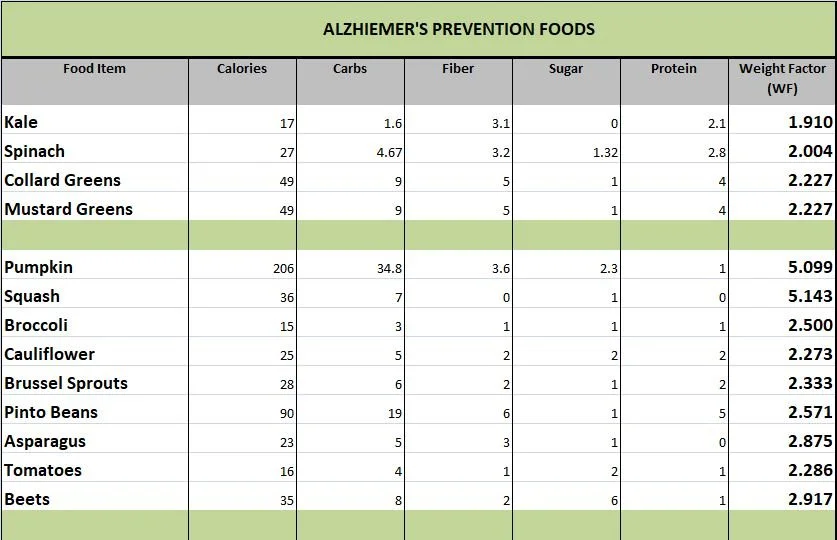
The objective is to keep all your menu items at or below a MAC Score of 3.50 not just to drop weight, inches off your waistline, age off appearance of your skin, but to prevent Alzheimer’s as we age.
DO NOT ABANDON HEALTHY FATS from your DIET- Monounsaturated and polyunsaturated fats are essential for cognitive function. Abundant in olive oil, avocados, nuts, seeds, and fatty fish, they compose the flexible membranes of brain cells, supporting rapid neuron signaling and synaptic plasticity. Omega-3 polyunsaturated fats, particularly DHA and EPA, lower neuroinflammation, neutralize oxidative stress, and aid amyloid-beta clearance linked to Alzheimer’s. Diets high in these healthy fats, such as the MAC, or Mediterranean, diet, correlate with reduced cognitive decline and delayed dementia onset by safeguarding memory, learning capacity, and long-term brain health throughout aging. The medical case that Dr. Mark Siegel mentioned offers hope for those diagnosed with Alzheimer’s that might benefit from a MAC Diet.
MY COLLECTION OF BOOKS ON AMAZON KINDLE IN E-BOOK & PAPERBACK TO PURCHASE: