THE 3 BAJA MAC FITNESS WORKOUT TIERS, TAILORED FOR THOSE FROM 12 TO OVER AGE 50
BRAVO EXERCISE TIER, Entry-Level Program
Beginners Rehabbing Anabolic Vascular Objectives, or BRAVO, Fitness Tier is an entry-level program designed for adults over 50, people new to exercise, and those recovering from illness or injury. Its purpose is to restore basic movement, balance, circulation, and confidence so participants can later advance to more demanding training if they choose. The focus is consistency, safety, and vascular health—not intensity. Sessions use gentle work that supports blood flow, breathing, and joint mobility without overloading a recovering or developing body.
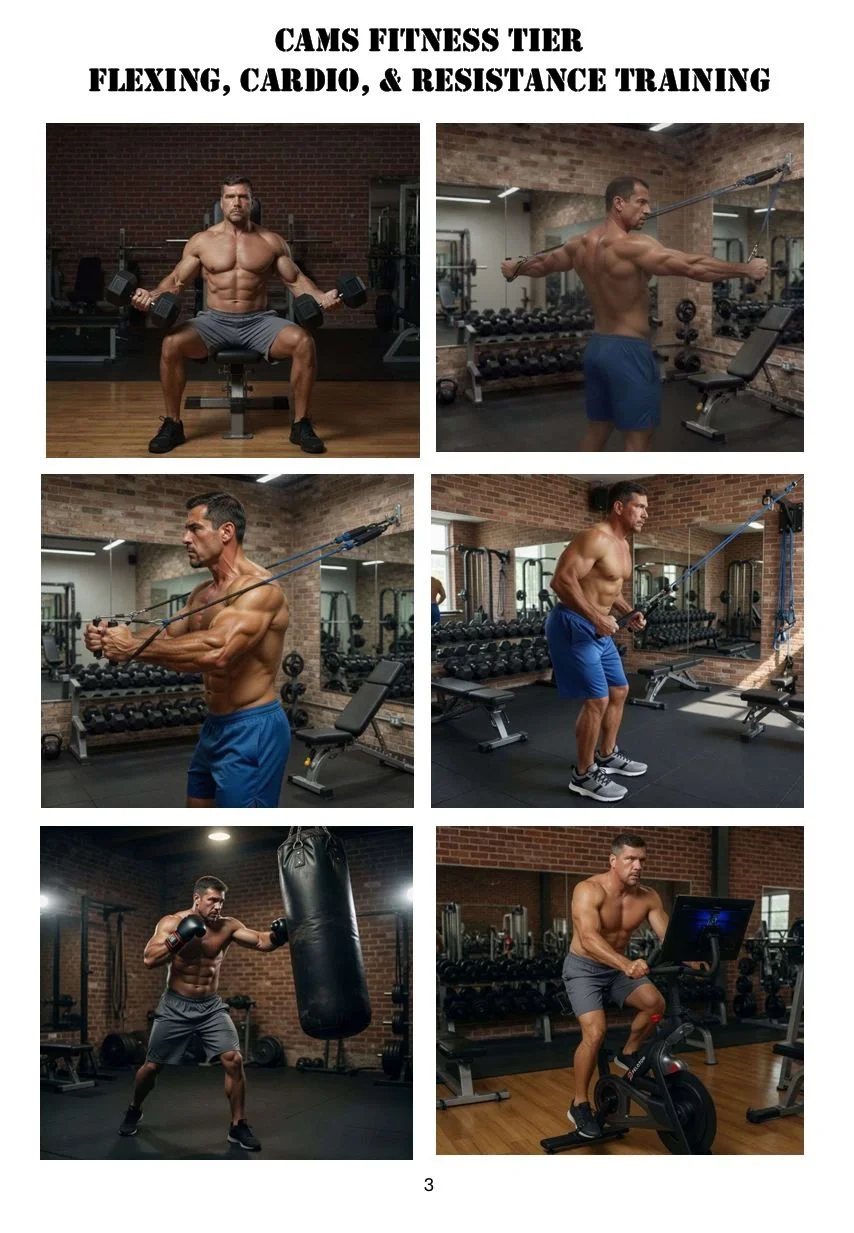
Workouts last 15 to 20 minutes and are performed three times per week on nonconsecutive days. Typical sessions include walking, boxing, and cycling to improve movement quality, balance, stability, and stamina. The aim is a modest rise in heart rate, better circulation, and improved coordination.
The same conservative principles apply to children beginning structured activity. Formal strength training should generally wait until about age 13. Before then, children should stay with play-based movement, coordination, balance, and aerobic play that builds skill without heavy loading. After 13, and only with proper supervision, they can progress toward structured strength work. Rehab participants should follow the same sequence: master pain-free, low-impact patterns first.
BRAVO works best when it stays short, repeatable, and conservative. Clearance from a physician or physical therapist is essential after illness, injury, or those over the age of 50. Progress is measured by easier breathing, better stamina, and improvements in health markers such as blood pressure, blood glucose, cholesterol, and waist circumference. Done well, BRAVO can serve as a foundation for higher level fitness tiers.
The term Anabolic is strength training that stimulates muscle growth and triggers hormonal responses that promote tissue building.
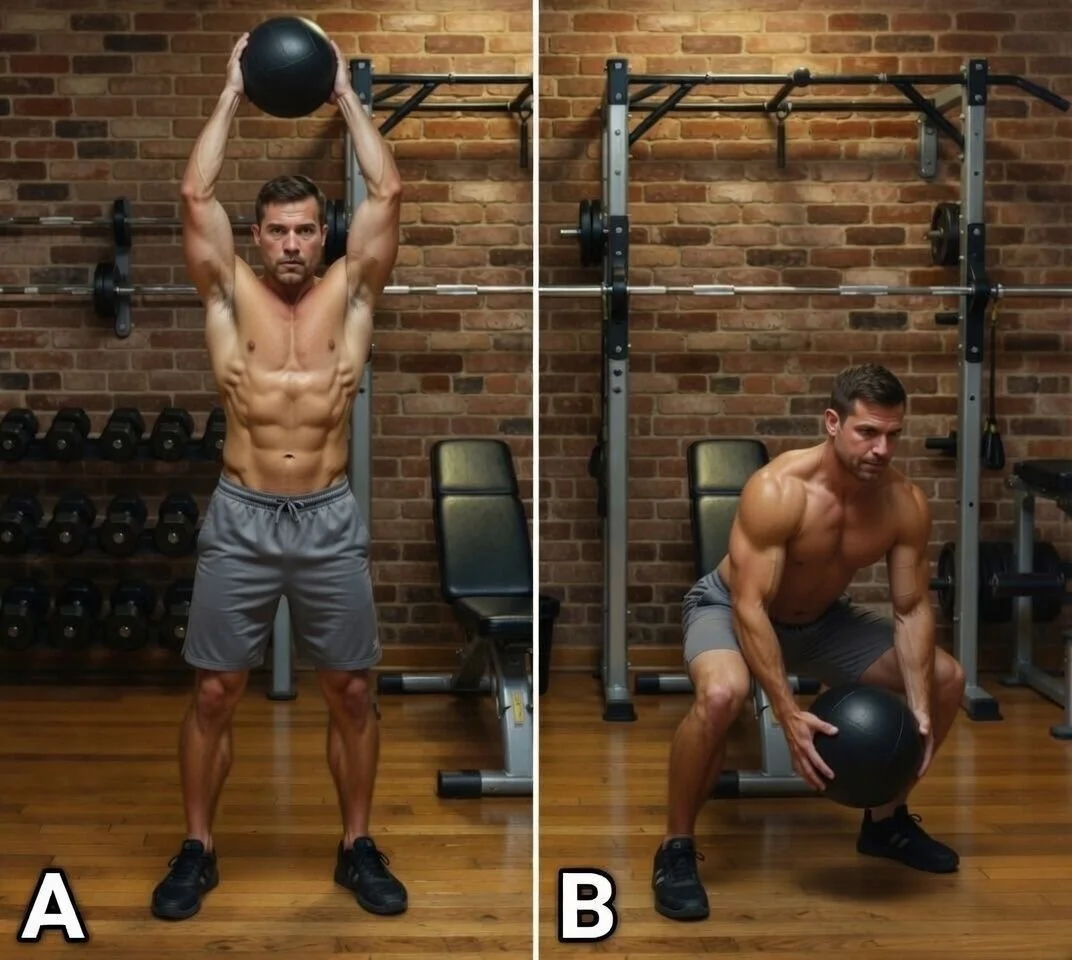
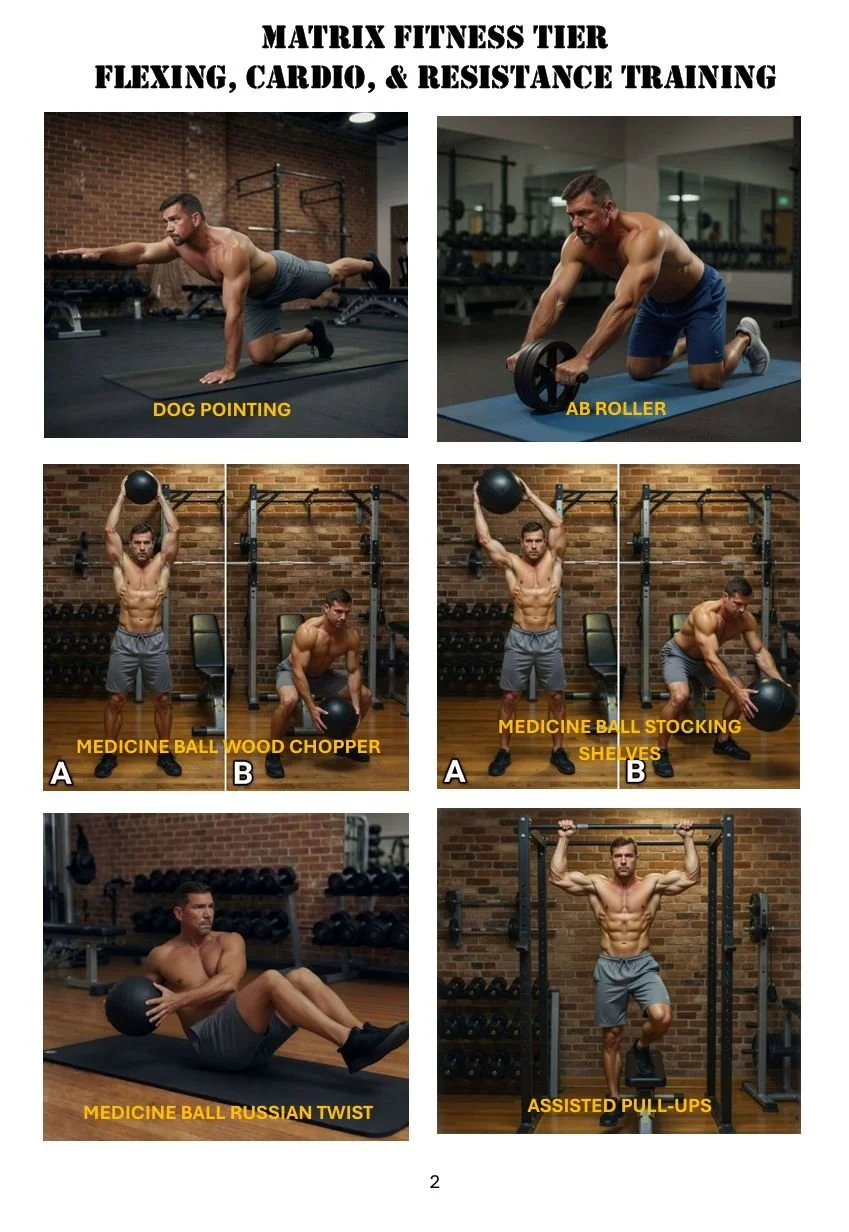
The medicine-ball wood chopper is a full-body exercise that combines cardio and strength training in one movement.
It is essential that you stay hydrated between exercises and take a 30-second rest between them.
BRAVO is based on performing one to three sets of 10 repetitions of each exercise.Important fact: Cardio has a 20- to 30-minute afterburn, while resistance training can produce an afterburn of up to six hours, during which your body continues burning calories. This is why a fitness routine should include resistance training.

Always consult your physician before working out to see what physical fitness is right for you. For the first couple of workouts consult a physical trainer to ensure you are using the correct procedures, posture, and form to perform your fitness elements.
Workout with a Purpose:
1 Corinthians 9:26-27 So I run with purpose in every step. I am not just shadowboxing. I discipline my body like an athlete, training it to do what I want it to do and how I want it to perform.
CAMS EXERCISE TIER, Second-Level Program
Conditioning Anabolic Maintain Stats, or CAMS, Fitness is the next step for people who already have a basic fitness routine and now want to strengthen and tone muscle without over taxing their abilities. It is an entry-level conditioning tier: more demanding than beginner movement work, but still conservative enough for adults returning from inactivity, advancing from rehab, or simply ready to train with purpose four days a week.
CAMS exists to protect and improve the numbers that reflect long-term health: blood pressure, blood sugar, cholesterol, resting pulse, and waistline. Strength training is treated as a medical ally, not a separate project. Muscle that is used regularly helps the body handle glucose and fats more efficiently, supports circulation, and makes a healthier midsection easier to maintain. The program’s measure of success is not only firmer muscle but steadier vital signs and better daily energy.
Sessions last 20 to 25 minutes and are performed four times per week. That length is long enough to raise the heart rate and load the major muscle groups and short enough to stay repeatable. Frequency matters to promote conditioning, strength, and burn energy.
Core strength is the center of the work. Toned abdominals and deep trunk muscles improve posture, breathing, balance, and spinal stability. A stronger midsection is not only a visual goal; it supports a healthier waistline and improves walking, lifting, and sport performances. Training stays joint-friendly: controlled body-weight patterns, light to moderate resistance, and cardio that elevates pulse without pounding recovering joints.
Participants progress only when movement is pain-free and breathing stays steady. After illness or injury, physician or physical therapist clearance remains essential. Progress is tracked in stamina, easier breathing, a more stable pulse, and lab or clinic readings—blood pressure, glucose, cholesterol—alongside changes in waist measurement.
CAMS works when it stays consistent, measurable, and modestly challenging. It is a platform for lasting fitness: strong enough to change the body, disciplined enough to keep health markers in range, and brief enough that people can keep showing up.
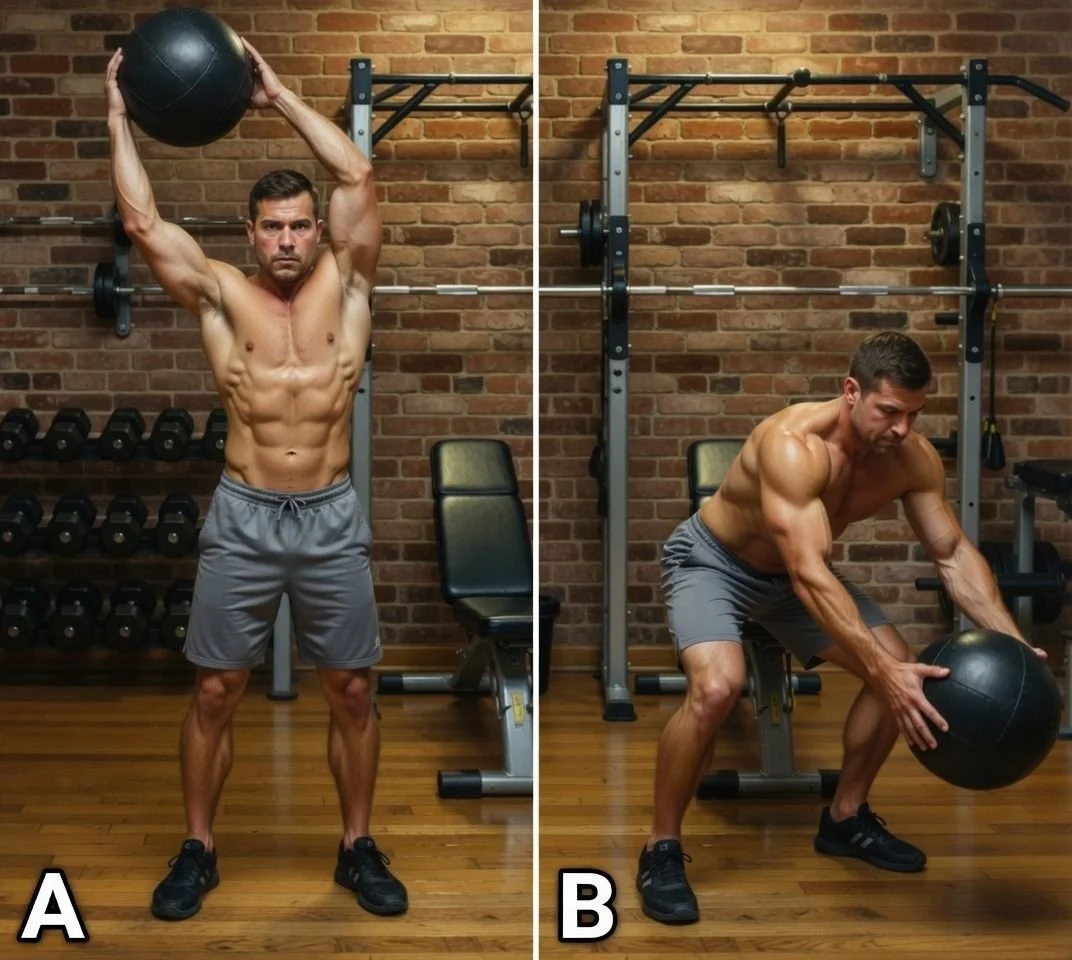
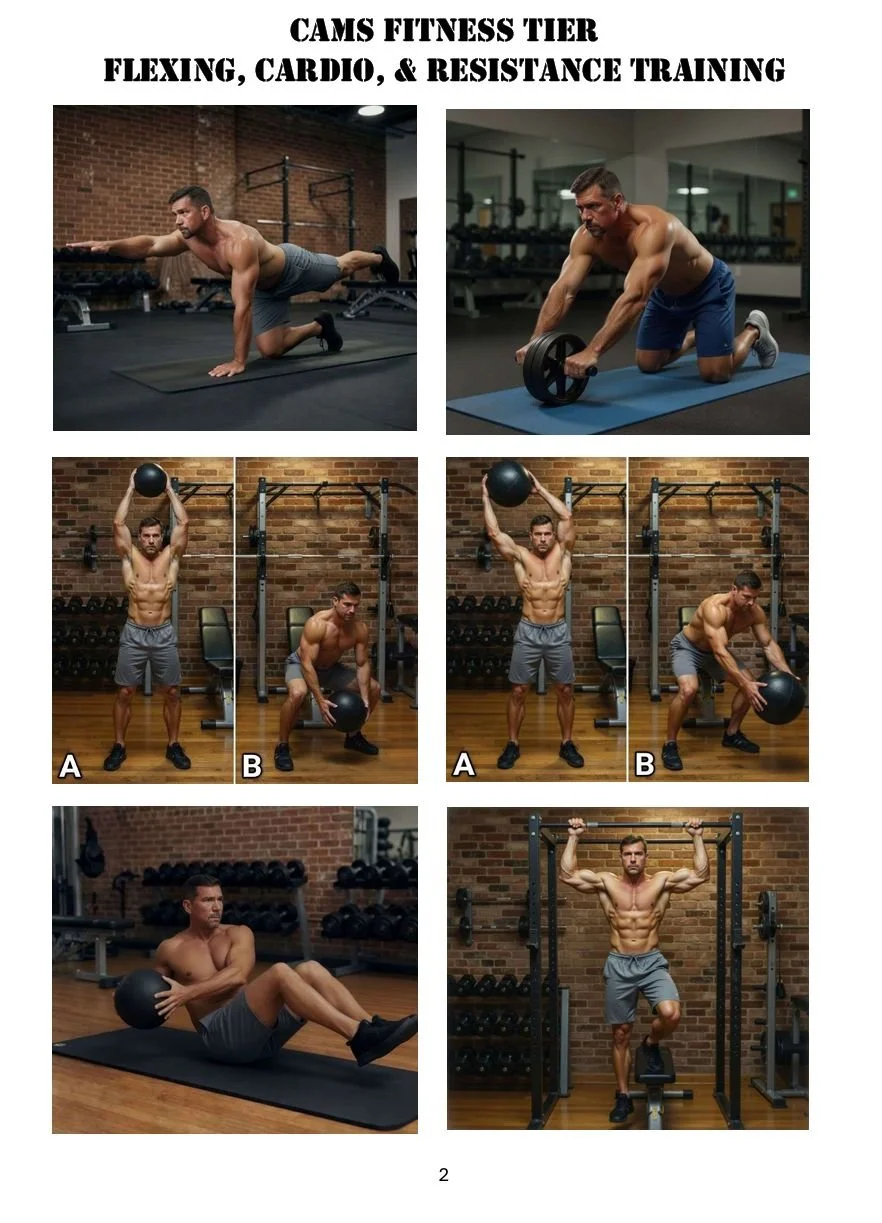
The medicine-ball diagonal wood chopper (also known as stocking the shelves) is an excellent core exercise that builds stamina and endurance and is especially useful for golfers.
After I was cleared by my neurosurgeon following back surgery, I was surprised to find that both the wood chopper and stocking the shelves were an enormous benefit in rehabbing so I could play golf again.
Instead of a medicine ball, a dumbbell can be used. Dumbbells offer a wider range of weights, from 2 to 35 pounds. For safety, make sure your hands can grip each end securely, as I am demonstrating below

MATRIX EXERCISE TIER, Third-Level Program
Maximized Anabolic Training Rest Interval X-Fitness (MATRIX) is a structured full-body program that pairs high- and low-rep strength work with planned pauses. Sets and stations are separated by a 60-second rest so the body can recover just enough to keep form honest and output high. The method blends compound concentric lifts with calisthenics and cardio. The aim is not random fatigue. It is repeatable loading that builds muscle, tendon resilience, and work capacity.
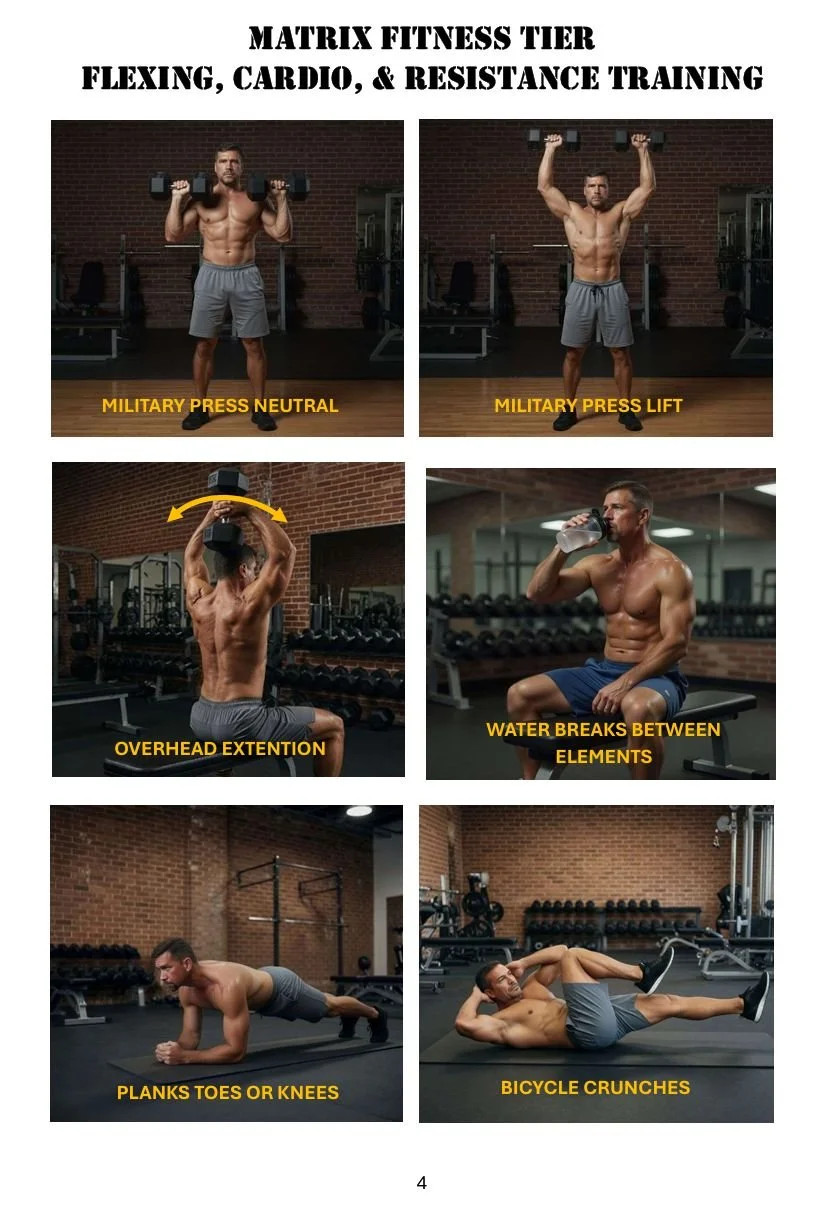
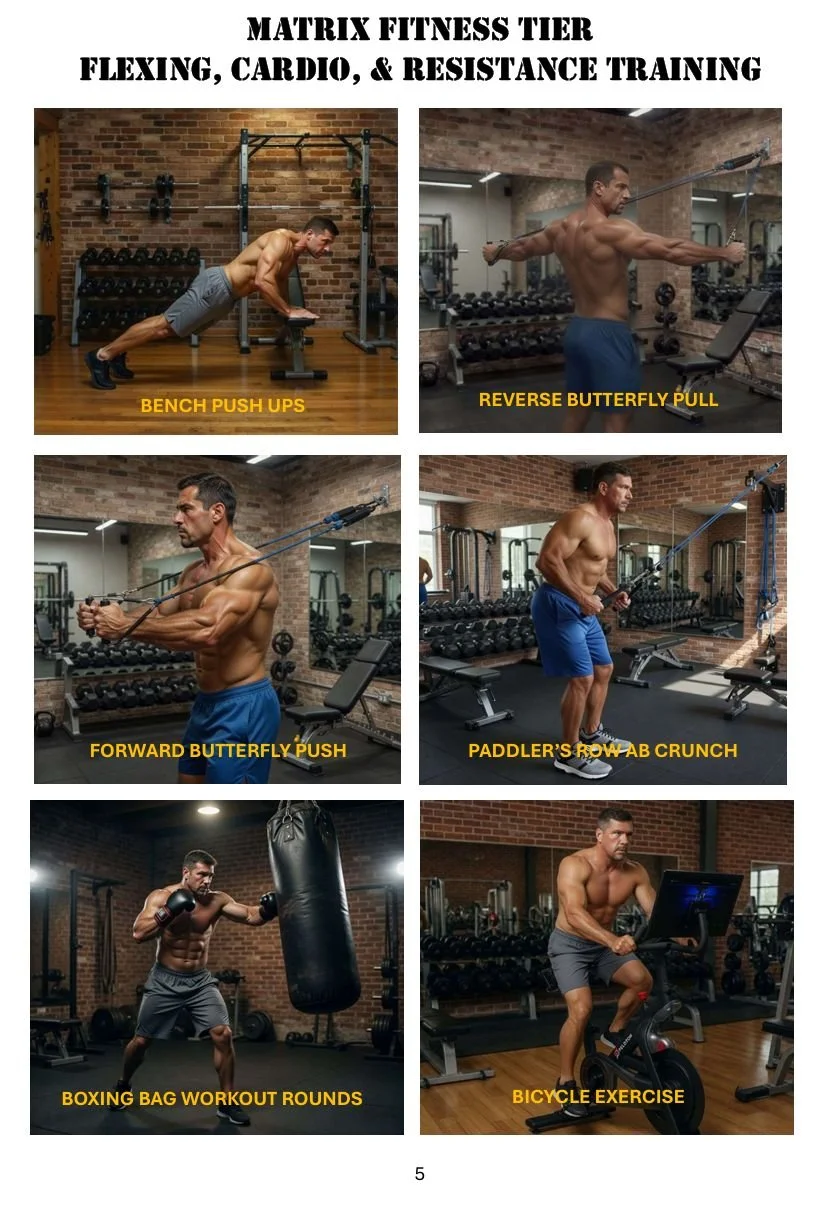
MATRIX sessions last 45 to 65 minutes and are trained four to five times per week. That window is long enough to cover the major patterns and short enough to leave room for recovery time. Strength work centers on compound movements: squats, deadlifts, military presses, bench presses, pull-ups, and overhead extensions. These lifts train hips, legs, back, chest, shoulders, arms, and core together.
Calisthenics fills gaps in control and relative strength. Cardio—bicycling and heavy-bag boxing—raises heart rate, sharpens coordination, and keeps the session from becoming only a barbell routine.
The rest interval is observed between sets and elements for water and recovery. Thirty seconds between sets and 60- seconds between elements is long enough to restore quality reps and short enough to keep metabolic demand elevated. High-rep sets build endurance and local work capacity.
Low-rep sets allow heavier loading and a stronger stimulus for muscle and connective tissue, that is referred to as Juggernaut workout. Alternating those ranges inside one workout is how MATRIX tries to train both ends of the strength and endurance spectrum without turning every day into a max-out or a marathon.
A further goal is tissue quality across the lifespan. Consistent mechanical loading helps the body maintain muscle and supports collagen production in tendons, ligaments, and especially the skin. This provides the age-defying capability the body has in producing a natural growth hormone. Collagen is not conjured by a slogan; it is encouraged by progressive tension, protein-rich recovery, sleep, and time.
MATRIX supplies the tension heavy enough to matter, paced enough to repeat.
Progress depends on maintaining safety first and foremost. Loads increase only when the squat, hinge, press, and pull stay controlled through a full, pain-free range.
Boxing and cycling should raise pulse without wrecking the next strength day. Four to five sessions a week work only if the 60-second pauses are respected and at least one easier day remains in the week.
MATRIX succeeds when it stays consistent and disciplined with compound strength training, calisthenics, cardio, timed rest, and enough weekly frequency to change the body without breaking the routine that keeps it strong. If you are seeking tone, definition, and strong core and abdominal muscles MATRIX is your workout to see results in six to seven weeks.
All three Tier exercises should be combined with the MAC (Macronutrients) DIET that is high in Protein, Fiber, Omega Fatty Acids, Complex-Carbs, and Fructose (natural sugar) with limiting Saturated Fats, and eliminating Trans-Fats and added sugars. By using 9-Data Points on the standard nutrition labels to limit for to a MAC Score of 3.50, individuals can turn their body into a calorie-burning juggernaut where you can reduce excess fat and inches off your waistline. A healthy waistline should be an individual height in inches / 2.20.
For example I am 66 inches tall / 2.2 = 30- inches my actual waistline is 29.50- inches.
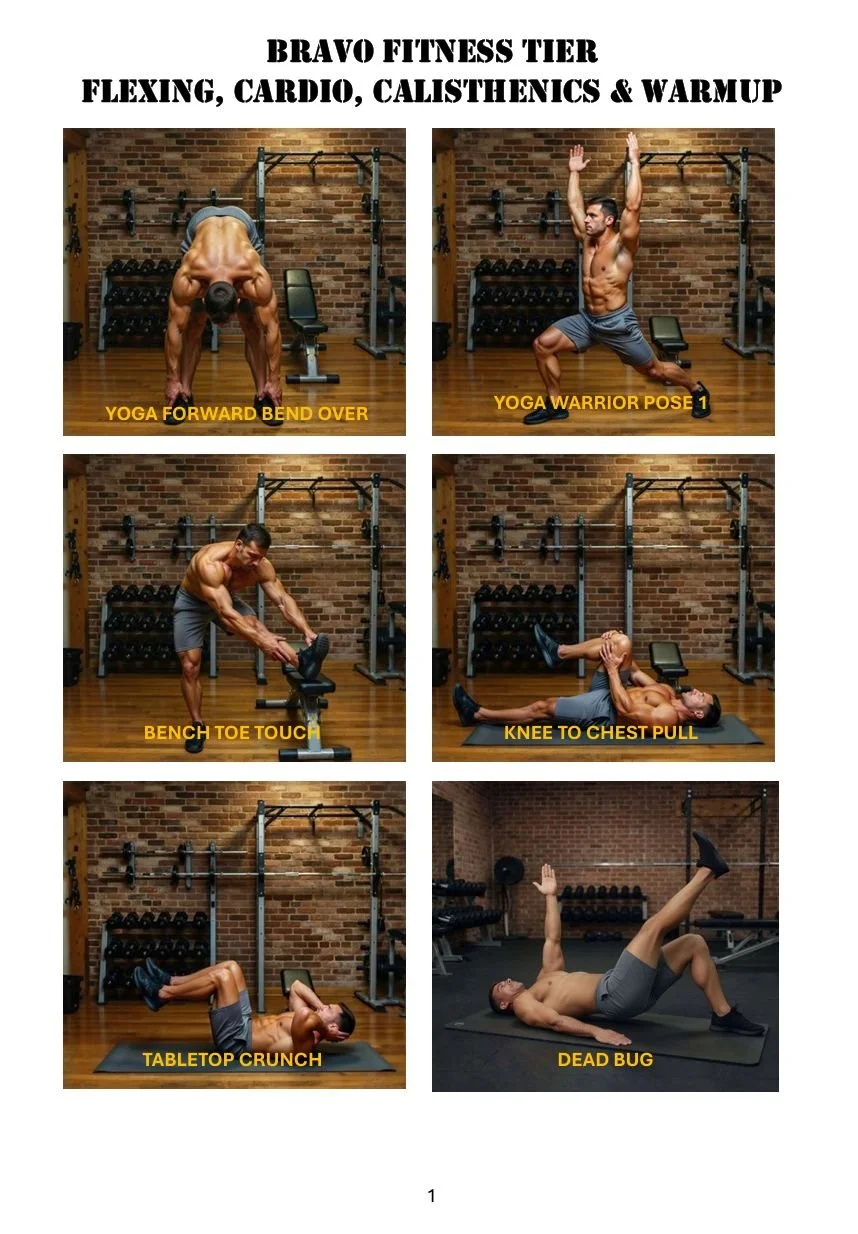
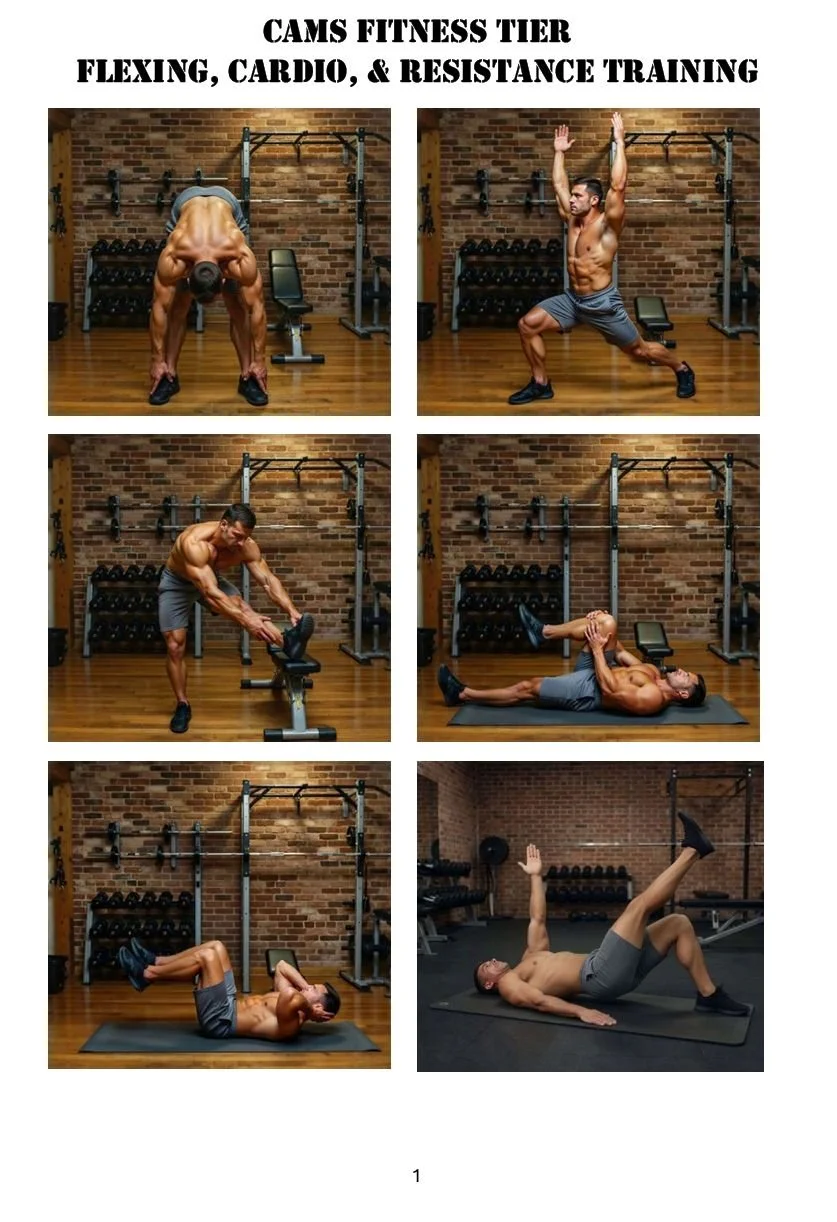
All three of the BAJA MAC Fitness Workouts includes warm ups before cardio and strength training:
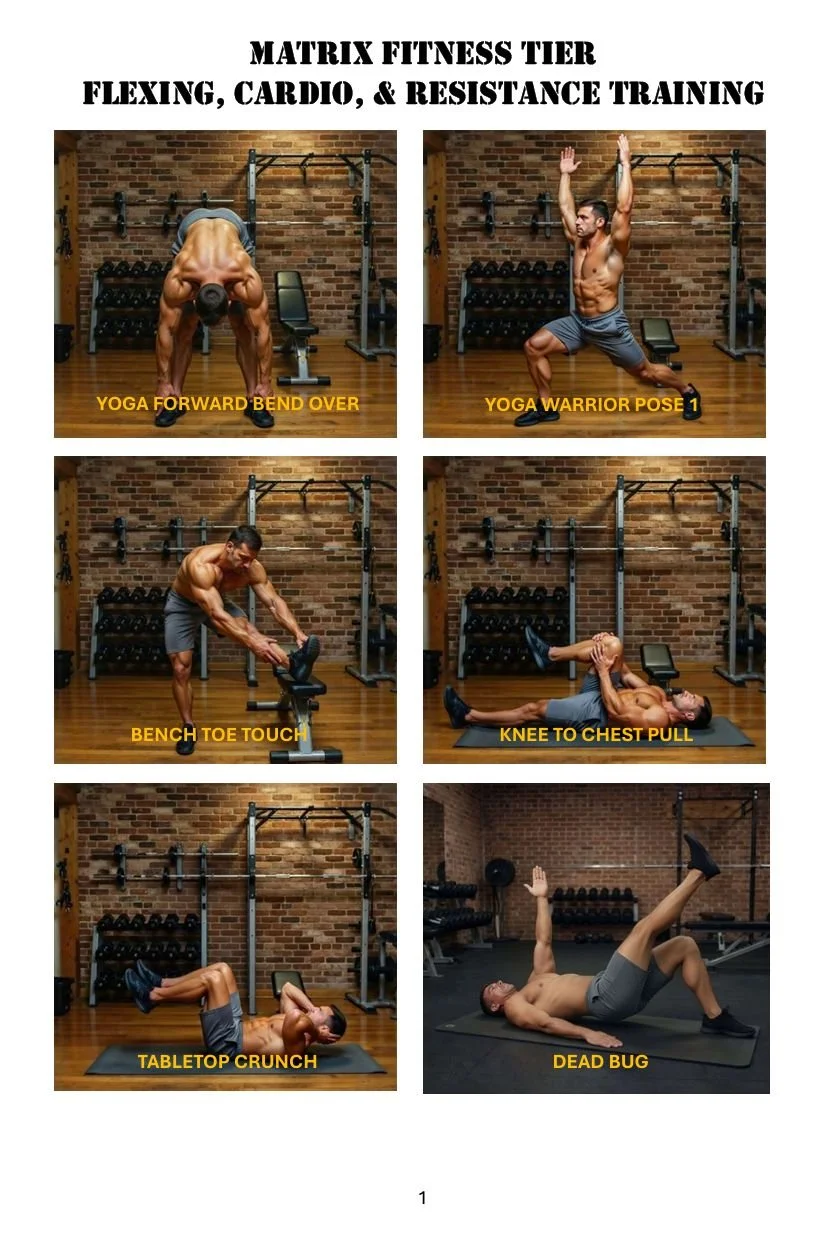
PROPER and SAFE STRENGTH TRAINING PROCEDURES:
Proper and Safe Posture for Strength Training and 40 procedures to avoid injuries:
Posture:
· a small inward curve in the low back (natural lordosis).
· a slight outward curve in the upper back.
· Chin up and eyes looking forward.
Procedures:
Bend at the hip joints; do not fold at the waist.
Push the hips back first; the torso follows, bend at the knees.
Keep the spine neutral—same shape as standing tall.
Neutral is a mild natural curve, not a rounded C and not a big reverse C.
Brace the core before the hips move.
Soften the knees so the hips can travel backward.
Do not lock the knees on a hinge.
Keep weight toward the mid of feet and heels.
Keep weight close to the body as possible.
If you feel the lift mostly in the low back, you are likely bending at the waist or over-arching the back.
Stop the hinge when the hamstrings get tight, not when the back changes shape.
Practice the hinge with light loads before adding additional load.
Warm up 5–10 minutes before heavy work.
Mobilize hips and upper back; do not force extra range through the lumbar spine.
Rehearse with an empty bar or light weights like dumbbells.
Add weight only when the spine stays quiet for every rep.
Use small load increments.
Leave 1–3 reps in reserve on most sets.
Stop when fatigue changes your back position.
Do not chase maxes every week have light strength training days.
Deadlift setup: bar over mid-foot, shins close, slack out of the bar.
Knees, hips and shoulders rise together.
Lock out tall through the hips; do not lean back into a reverse C.
Lower with the same hinge you used to lift.
Shorten RDLs (Roman Dead Lift) or good mornings if that keeps the spine neutral.
Squats still need a braced, neutral trunk.
Do not let the pelvis tuck and the low back round at the bottom.
Do not crank the low back into extension to “sit deeper.”
Overhead presses: glutes on, ribs down—no banana back.
Rows: hold a hinge; do not round or over-arch to swing the weight.
Inhale and brace before the hard part of the lift. Inhale lifting and exhaling lowering.
Keep the chin up with eyes looking straight ahead.
Engage the lats; keep the chest proud without flared ribs.
Set safety before heavy squats and presses.
Pick up plates and dumbbells with one-foot forward technique to hinge at the hips.
Do not twist while holding a heavy load.
A belt does not fix a rounded or over-arched back it is for abdominal muscles.
Never train through sharp, shooting, or radiating pain.
Strengthen glutes and hamstrings so the hips, not the waist, do the work.
Use the same hip-hinge and neutral-spine rules for gym lifts and daily lifting.
Always consult your physician before working out to see what physical fitness is right for you. For the first couple of workouts consult a physical trainer to ensure you are using the correct procedures, posture, and form to perform your fitness elements.
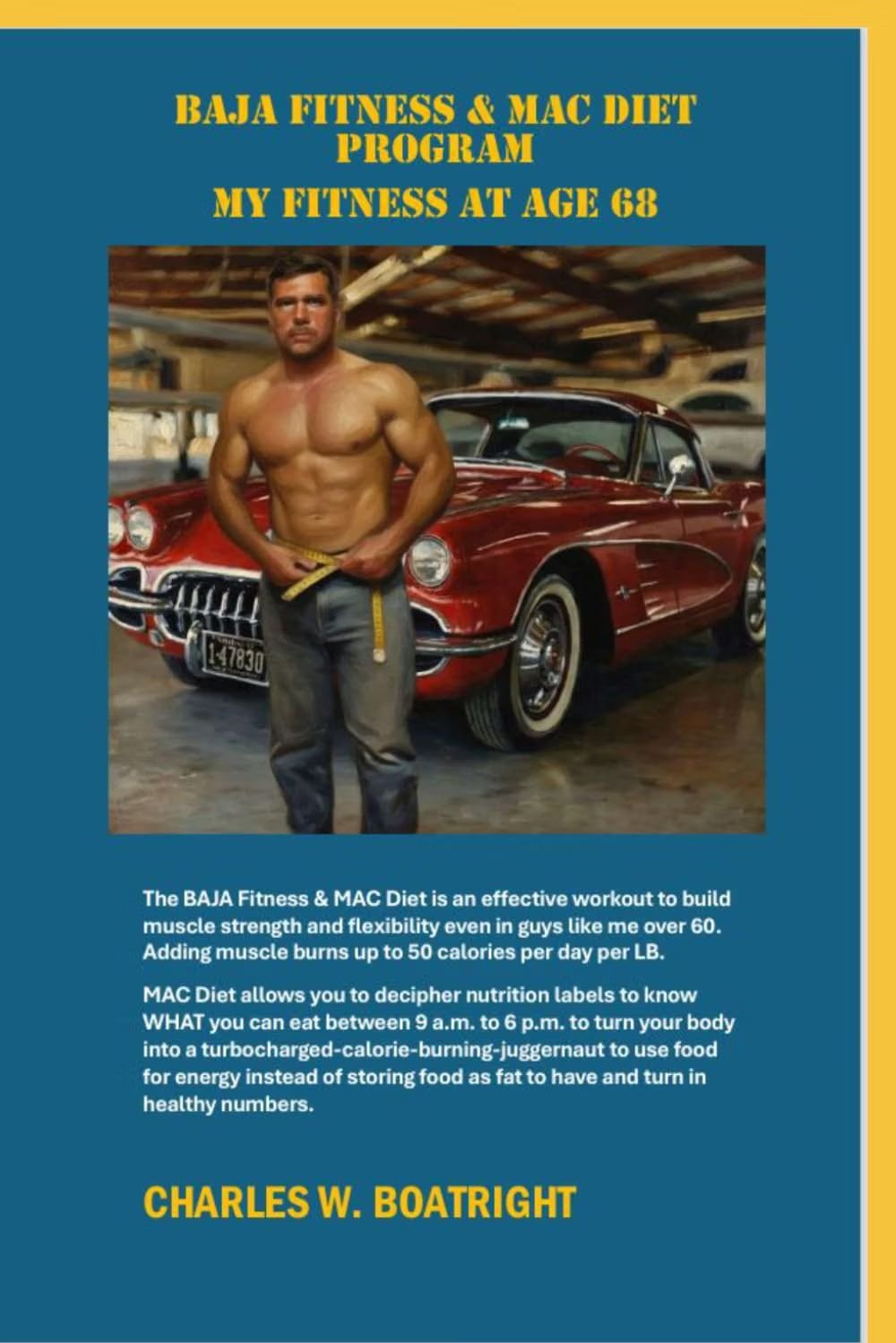
To the right, is my book on Amazon Kindle in E-book and Paperback that covers my BAJA Fitness and my MAC Diet that I have followed since 2014 at age 56. The cover photograph was taken in April of 2026 before we had a classic car and airshow at our hangar. I am 68 in this cover photograph. Use the link below to purchase you copy of: BAJA FITNESS & MAC DIET PROGRAM, MY FITNESS AT AGE 68:
POST WORKOUT COOL DOWN:
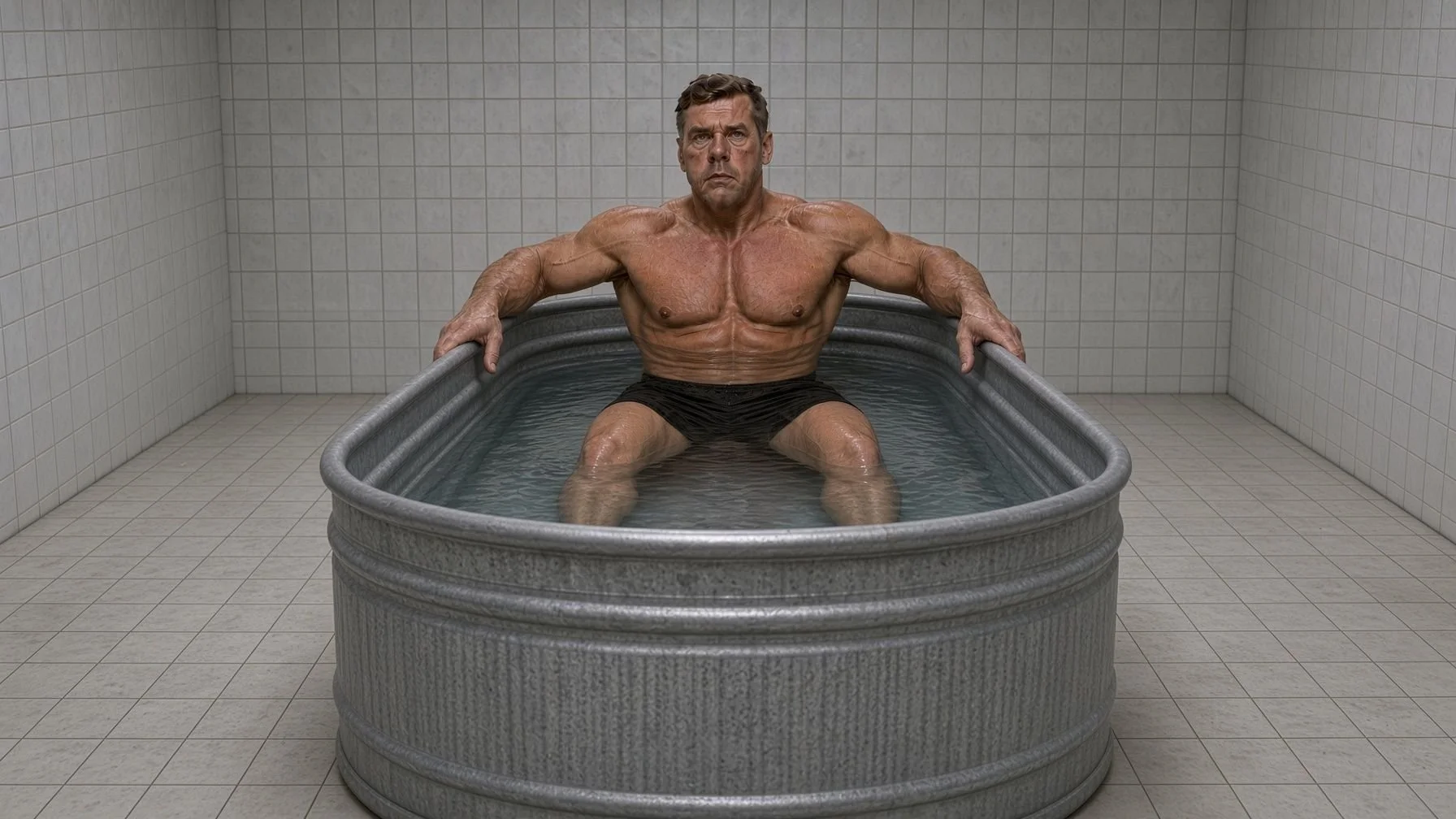
In my MATRIX TIER, I use Cardio to cool down from my strength training components. I also use a COOL-WATER-IMMERSION (CWI) to ease stress, strain, soreness in my muscles and joints and tone my skin and muscles. I usually have my water at 58 degrees Fahrenheit where I immerse for 15- minutes maximum. If you aren’t accustom to COOL-WATER-IMMERSION, raise your bath temperature to 65 to 68 degrees Fahrenheit.
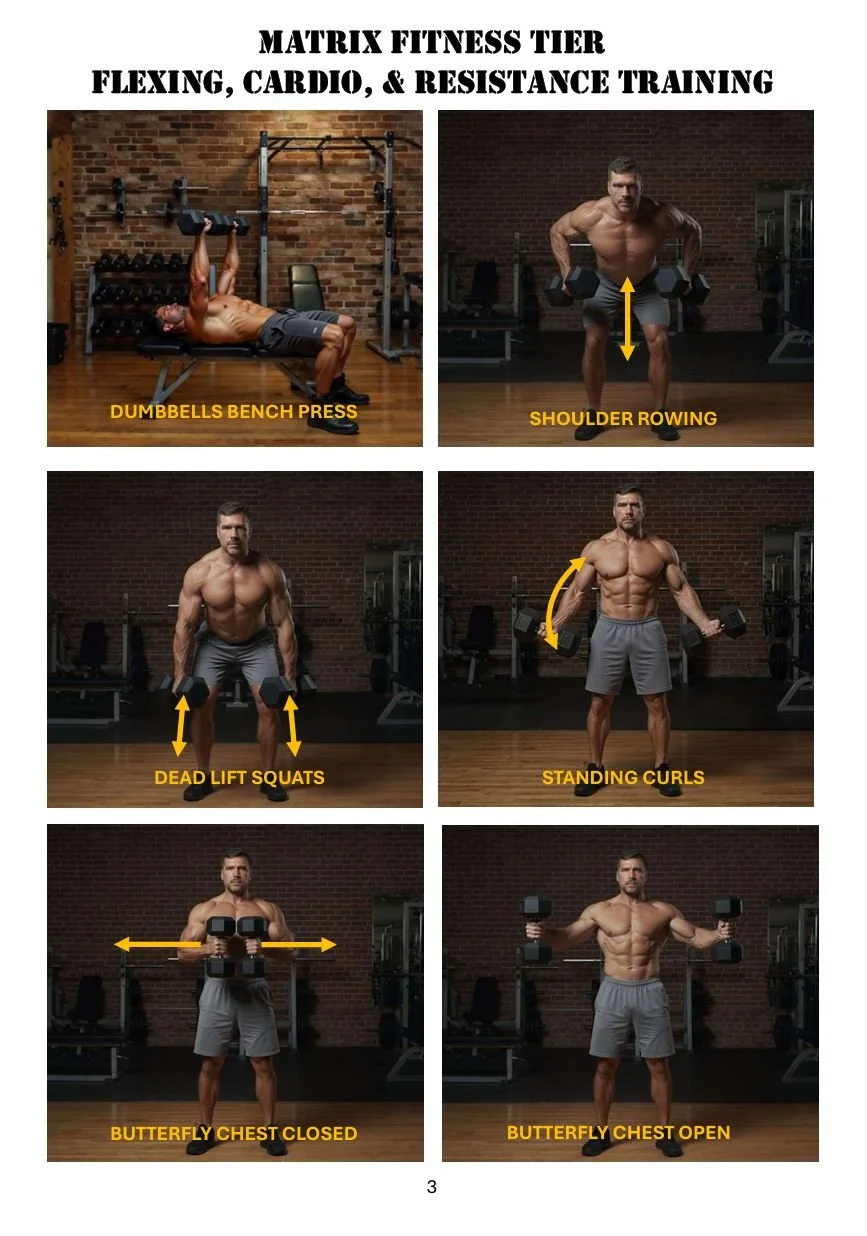
Below is me demonstrating how I combine a Squat with a Roman Dead Lift Element for Compound Cross Fitness Technique. I also demonstrate how I use dumbbells in my Bench Pressing in case I get into a bind that I can just drop the weights onto a cushion mat. If I was using a bar bell configuration I would have to use a spotter: