GOLFER’S POWER MATRIX The S.T.P. Power Matrix
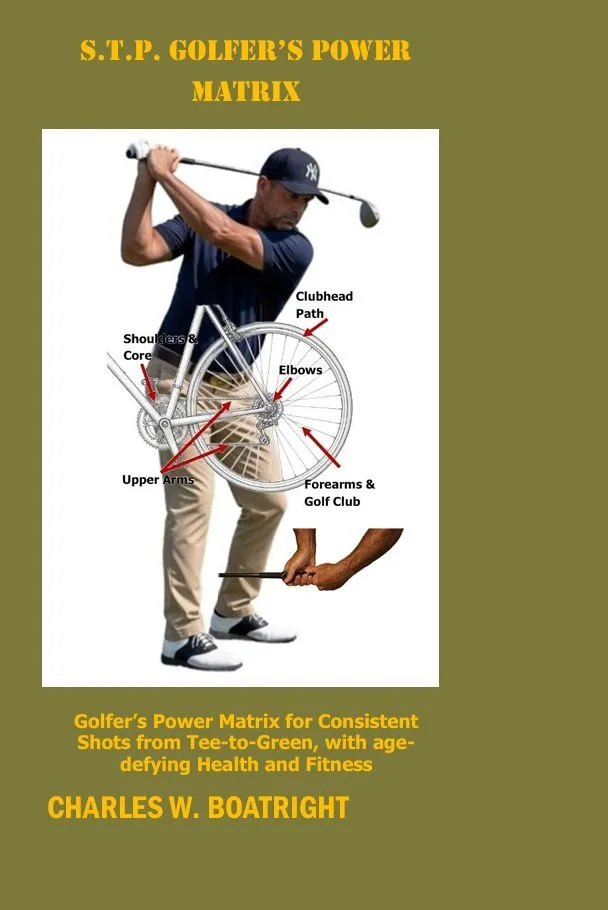
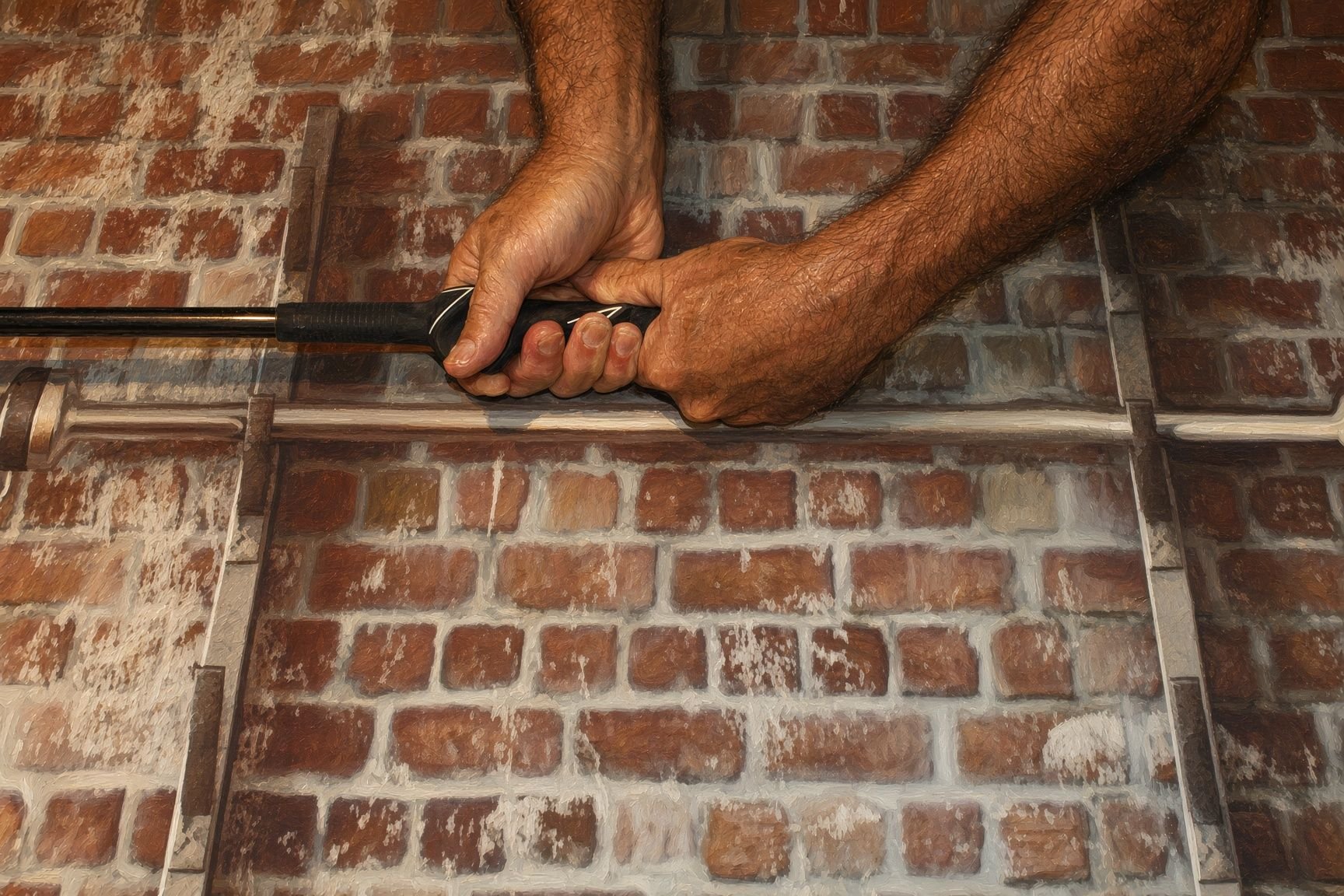
The Ben Hogan’s wrist action that he wanted to create in his golf swing that my grandfather taught me to setup my golf swing.
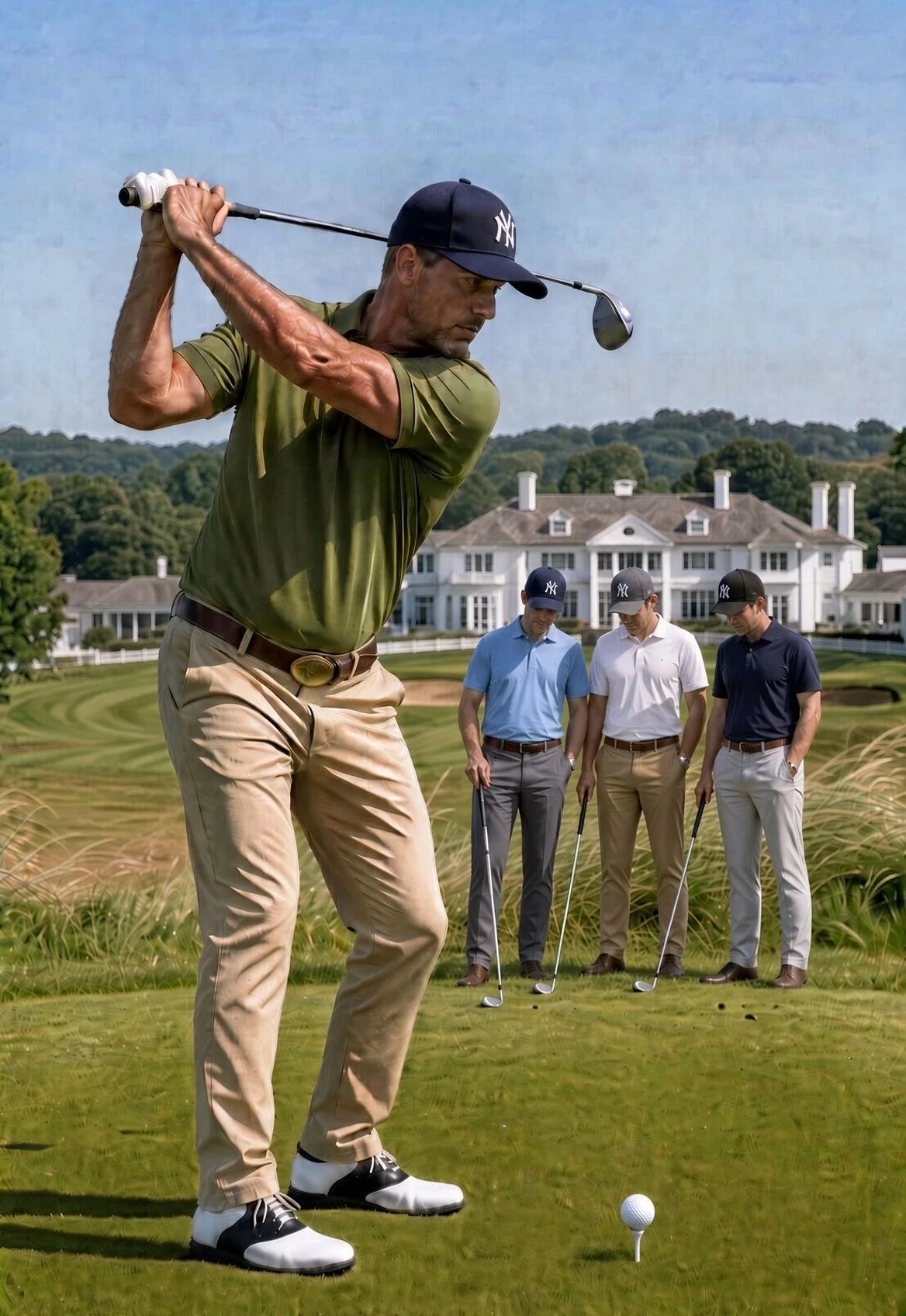
Demonstrating the Orange Bucket Challenge where I made five- 250 yard tee shots within 15- foot of a orange Home Depot Bucket. I did this for WJTV-12 SPORTS ZONE Show that wanted to interview me about my MATRIX Golf Swing.
In my golf training facility, I demonstrated one of the most critical golf shot, the short pitch shot around the green that requires finesse more than muscles. If you want to practice your golf swing during the off season inside the pitch and chip shots are your go to shot that represents the golf shot from Tee-to-Green.
GOLFER’S POWER MATRIX The S.T.P. Power Matrix: Play Golf in the Zone with Charisma, Fitness, & Health
Most golfers do not fail for lack of effort. They fail because the swing they are trying to build has too many moving parts, too many conscious thoughts, and too little connection to the motor skills the body already owns.
Golfer’s Power Matrix: The S.T.P. Power Matrix: Play Golf in the Zone with Charisma, Fitness, & Health, by Charles W. Boatright, begins from the opposite premise. The power a golfer needs is not a new invention. It is a kinetic chain that starts with three simple, natural wrist maneuvers already stored in the subconscious mind—skills many players first practiced before the age of eight or ten, often with a baseball bat in their hands.
Boatright writes as a player and a technical mind, not as a touring professional selling a secret. Born in Little Rock, Arkansas, he trained as a civil engineer, spent more than three decades writing procedures for transmission-line work, and became an avid golfer in his mid-thirties. After hip surgery in 2007, he rebuilt his swing around the body’s natural mechanics, drawing on the baseball-type motion and the simple sprocket logic he had earlier described in The ESPY Golf Swing Coach.
He reduced his handicap to single digits. At sixty-eight, he presents this later book as the next step: a self-coached sequence that can be carried into a player’s nineties, paired with the fitness and diet program that, in his account, restored the strength, appearance, and daily capacity he had in his mid-thirties.
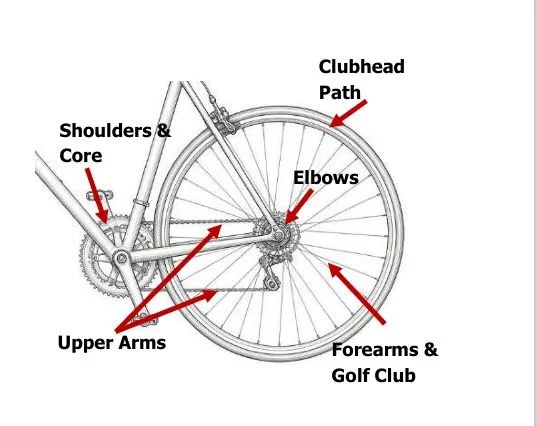
The S.T.P. Power Matrix is the spine of that argument. The matrix treats the swing as a chain that begins by presetting the wrists. Those three maneuvers, Boatright contends, place the club and the body into a position the subconscious already recognizes. From there, the golfer is asked to feel rather than to develop swing thoughts.
To stand on the tee box is compared with something closer to that of the quiet confidence of the batter in the batter’s box. Incremental drills, course-management rules, and ordinary sportsmanship are offered as the practice path: persistence, risk awareness, and confidence without elite athleticism or expensive equipment.
The promise is not a reconstructed swing rebuilt every week from the latest tip. It is a repeatable simple sequence meant to eliminate swing thoughts, reduce downtime, nerves, and the frustration that comes when the conscious mind crowds out muscle memory.
The subtitles three words—charisma, fitness, and health—are not decorative. Boatright folds the golf sequence into the BAJA Fitness and MAC Diet program he has developed under the BAJA Fitness Sports Page with sports performance. The MAC approach, drawn from his reading of nutrition labels, favors foods high in protein, fiber, omega fatty acids, and complex carbohydrates, with limited fructose and no added sugars, scored at or below 3.50, and eaten inside a daytime window.
Strength work, cardio, and an active sporting life are presented as the companions of that diet. Golf, in this framing, is both the skill and the long-term activity that keeps the body in use.
The book also reaches beyond the private game. Boatright offers the matrix as a practical curriculum for homeschool families: physical education, problem-solving, and character training on the same ground. Under the name Operation DOG TAGS, he links golf, structured social play, yoga, and fitness to routines he associates with cognitive behavioral therapy for veterans, first responders, and others living with PTSD—large-muscle work meant to slow breathing and heart rate in a safe setting.
He notes that the PGA historically used golf in the treatment of World War I veterans dealing with what was then called shell shock. Readers should take that lineage as the author’s historical frame, not as a clinical claim.
What follows is an invitation to play in the zone by returning to what the body already knows, then to support that game with the fitness and health habits that make a long-playing life possible. The zone, in Boatright’s telling, is not a mystical state reserved for champions. It is the ordinary result of a simple wrist sequence, a clear mind, and a body kept fit enough to trust.
TICK-N-TOCK PUTTING Technique to hole more putts to lower your scores. The most critical golf shot in golf is the approach shot to land the golf ball within 15-feet of the pin. Even with professional golfer can make 75 percent of their putts inside 10-foot.