Chapter 4: Leveraging Glassdoor Reports for Companies’ Behavioral Analysis

In my BAJA Fitness Sport Page, I have found that there is very little difference between a scout evaluating athletes on a high-level college team recruiting and an investor evaluating a stock investment. There is always more than one main factor to consider. Experienced scouts use qualitative analysis to look at the entire profile of a recruit.
Employees have a tremendous impact on the success of a company based on fundamental analysis, technical analysis, behavioral analysis, and innovation analysis.
The message was clear—fundamentals and talent matter, but sustained motivation and commitment often decide outcomes.
The same logic applies to modern workforce analysis. Companies that treat employees as mere cost centers or interchangeable inputs risk overlooking the human factors that drive innovation, productivity, and long-term value creation. Employee satisfaction and talent retention function much like the character and heart that coaches seek. A motivated workforce is more likely to develop innovative services and products that genuinely improve customers’ professional and personal lives.
Platforms such as Glassdoor provide investors and analysts with a practical window into these interior dynamics, aggregating anonymous employee reviews that reveal culture, leadership effectiveness, and the likelihood that talented people will stay.
Beyond Credentials: Experience, Motivation, and the Retention Imperative
One critical dimension frequently under-weighted in traditional hiring and evaluation is the distinction between formal education and practical experience gained over the years, where retention is just as essential as a college degree. Degrees and certifications open doors, yet sustained performance often depends on accumulated know-how, judgment under pressure, and the ability to translate knowledge into results.
Companies that deliberately emphasize experience—through internal development, stretch assignments, and recognition of on-the-job learning—tend to build deeper institutional knowledge and skill within their workforce. When these experienced employees feel valued, they are less likely to leave, reducing costly turnover and preserving the tacit knowledge that new hires take years to acquire. I use Glassdoor to evaluate a company’s employee satisfaction and motivation.
Retention and reward systems are the mechanisms that convert this potential into advantage. Effective organizations do more than offer competitive pay; they create pathways for career growth, recognize contributions publicly, and align individual incentives with company purpose. The company rewards those who specialize in a particular job skill instead of overlooking their specialized development.
Research consistently shows that employees who perceive clear advancement opportunities and fair treatment are more engaged. Conversely, environments that prioritize credentials and diversification over monetary rewards for refined experience often suffer higher voluntary attrition. The result is a continuous cycle of recruiting and onboarding that drains resources and disrupts momentum. The company risks what is referred to as brain drain.
Glassdoor as an Investor’s Scouting Report
One baseball coach was fired because he only looked at an athlete’s stats and statistics instead of the person’s character and passion for the game.
Glassdoor has become a widely referenced resource precisely because it captures the employee perspective of the fundamentals of the company’s atmosphere. Employees rate companies overall and across specific dimensions including career opportunities, compensation and benefits, culture and values, senior management, and work-life balance. They also indicate whether they would recommend the employer to a friend and offer forward-looking views on the company’s business outlook. Because reviews are voluntary and anonymous, the aggregate ratings and written commentary provide a relatively unfiltered signal of workplace conditions.
For investors, these data serve as a function analogous to a coach’s evaluation of character, heart, and passion of the employee. High and improving Glassdoor scores often correlate with lower attrition. Studies combining Glassdoor reviews with large-scale employment transition data have found that stronger ratings on career opportunities, compensation, and leadership are associated with reduced turnover.
Employees who view their company’s near-term business outlook favorably are particularly less likely to leave. In practical terms, organizations that earn strong reviews tend to keep experienced talent longer, lowering replacement costs and sustaining the operational knowledge that supports consistent execution.
The financial implications have been documented over multiple periods. Portfolios constructed from publicly traded companies named to Glassdoor’s Best Places to Work lists have, on average, delivered higher returns than broad market benchmarks such as the S&P 500.
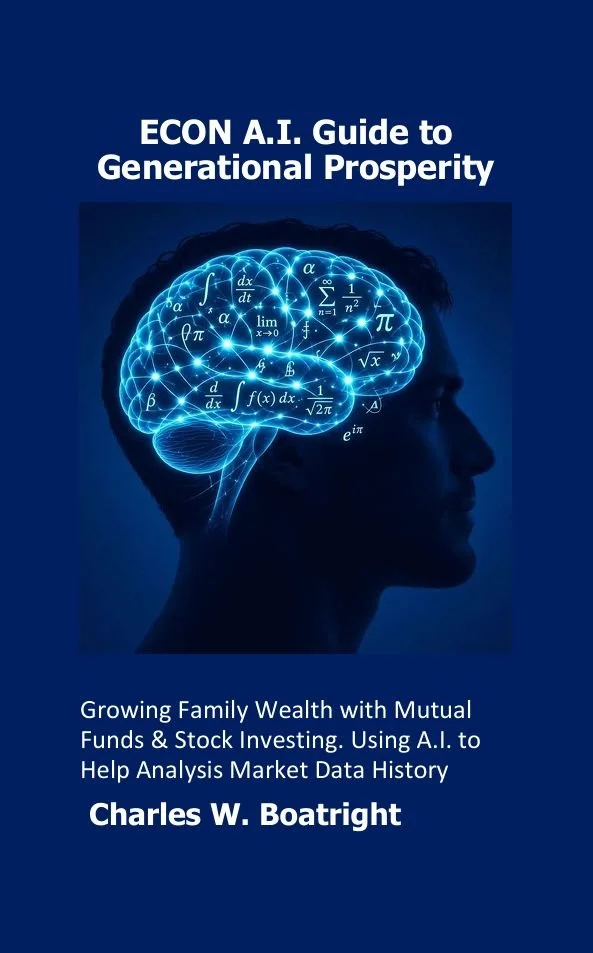
The front cover of my book to be released in late Spring of 2027 that look at how investors can use A.I. to evaluate potential stocks to purchase NOT on STOCKS TO PURCHASE:
One analysis covering awards from 2009 onward found that an equal-weighted portfolio of each year’s winners generated annualized returns approximately 4.7 percentage points higher than the S&P 500 through late 2025, with substantial cumulative out-performance. Academic work by Alex Edmans, using the related Fortune “100 Best Companies to Work For” list, similarly found long-run out-performance of roughly 2–3.5 percent per year after controlling for risk factors, industry, and firm characteristics. Improvements in crowdsourced ratings have also been linked to subsequent gains in sales, profitability, and earnings surprises. Changes in assessments of career opportunities and senior management appear especially informative, while work-life balance ratings show weaker links to returns in some studies.
These findings do not imply that every high-rated company will outperform or that Glassdoor scores are a complete investment thesis. Reviews can be influenced by recent events, sample size varies, and not every firm has sufficient data. Nonetheless, the consistent pattern across independent studies suggests that employee sentiment is not merely a soft cultural indicator; it is an observable input into human-capital quality that markets do not always fully price in real time.
Leadership as the Coaching Staff
Just as a coaching staff shape how players prepare, execute fundamentals, and respond to adversity, senior management exerts a powerful influence on employee motivation and performance. Glassdoor’s senior-management rating category captures this dimension directly.
Employees who rate leadership highly tend to report greater confidence in strategic decisions, direction, clearer communication, and a sense that their contributions matter. Poor leadership ratings, by contrast, frequently coincide with higher attrition and lower engagement.
The Importance of Sports in Business and Investing
Sports have always played a significant role in business. I enjoy the movie Rudy and how a young man compensated for his lack of skill and athletic talent with pure perseverance. The Rudy analogy is instructive in investing. Coach Yonto did not simply praise Rudy’s effort in private; he used it publicly to elevate the standards of the entire team. Coach Yonto pointed out to the scholarship Notre Dame varsity football players that if they just had the heart and passion that Rudy had, they would win championships.
Effective corporate leaders similarly highlight examples of perseverance and purpose to reinforce desired behaviors. When employees see that experience and demonstrated commitment are rewarded—through promotions, meaningful projects, or public recognition—they are more likely to invest discretionary effort. This is the organizational equivalent of “playing with heart.”
Companies that systematically invest in developing their workforce and retain such employees create a compounding advantage: experienced teams innovate more effectively, serve customers better, and attract additional talent who prefer environments where effort is recognized.
Implications for Analysis and Decision-Making
A practical workforce analysis that incorporates Glassdoor data typically proceeds along the following points:
First, review overall ratings and sub-scores over time, noting trends rather than single snapshots. Rising scores on career opportunities and senior management often precede improvements in retention and operating results.
Second, examine the volume and consistency of reviews; sparse or highly polarized feedback warrants caution.
Third, read representative comments for qualitative context—recurring themes around growth paths, recognition of experience, or leadership credibility provide texture that numerical ratings alone cannot.
Fourth, cross-reference with other available information, such as voluntary turnover figures disclosed in Environmental, Social, and Governance (ESG) reports where available, or broader industry benchmarks.
Investors and operators can also compare firms within the same sector. Differences in employee sentiment sometimes help explain why one company consistently delivers higher returns on invested capital or sustains innovation while peers struggle with talent churn. A highly motivated workforce can be a huge factor in reducing the cost of services and manufacturing costs by providing input on processes and engineering.
Because experience is sticky, organizations that successfully retain mid- and senior-level employees often preserve proprietary processes and customer relationships that pure credential-based hiring cannot easily replicate.
BAJA Business Highlights the Importance of Sports on Businesses
The sports analogy holds because both domains reward a balanced evaluation of measurable performance and intangible drivers. Coaches who ignore character, perseverance, passion, and heart risk assembling talented but fragile teams. Companies that focus solely on formal credentials or short-term output metrics while neglecting satisfaction and retention risk the same outcome.
Glassdoor and similar platforms give outsiders a structured way to observe these factors at scale. Evidence linking higher employee satisfaction to lower attrition, stronger operating performance, and superior long-run stock returns suggests that the signal is economically relevant.
Ultimately, the organizations that treat employee experience as a strategic asset—emphasizing real capability over credentials alone, rewarding demonstrated commitment, and maintaining leadership that inspires rather than merely directs—are better positioned to generate the sustained motivation that produces valuable products and services. In the language of the film, they are the teams that recognize the Rudy-like contributors with their perseverance in their ranks and elevate the standard for everyone else. For analysts and investors seeking a fuller picture of organizational health, reviewing employee satisfaction and retention signals is no longer optional color; it is part of the core scouting report on Glassdoor.
CHECKOUT MY COLLECTION OF FAITH BASE, HEALTH & FITNESS, & SPECIAL OPS BOOKS ON AMAZON KINDLE IN E-BOOK & PAPERBACK BOOKS: