Chapter 1: Generational Power Building Wealth Through Investing, Lessons of American Capitalism
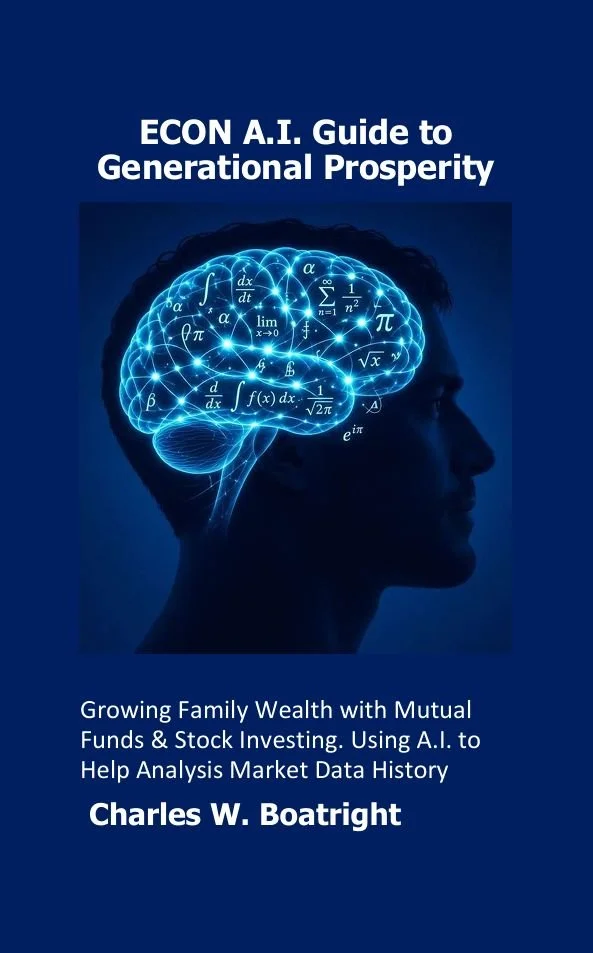
To be released in Spring of 2027.
I will be publishing a few of my chapters as I write them to provide background and highlight the importance of developing an investment strategy for generational wealth. I call my approach the Neanderthal Principle of investing in life’s necessities like energy, food, transportation, financials, and technology. Even the Neanderthals had to develop technologies for survival.
Chapter No. 1
Chapter One will be of great interest to parents, guardians, and especially those over the age of eight and above. This is Investment 101. One of the best avenues for creating wealth is having a work ethic and investing a portion of your earnings.
Here is an example of dollar cost averaging investment: What would be the future value of putting $100.00 a month into a mutual fund that earns 12% on a compound basis after 12 years starting at age 8? It would be worth Approximately $31,906.
Time is the single greatest advantage an investor can possess and take advantage of for generational wealth. The earlier capital is put to work, the longer compounding to magnify returns. Even a child as young as eight (8) can begin this process under parental or guardian guidance, transforming allowance and earning money from odd jobs, gifts, or a portion of family income into the foundation of generational wealth.
One of the best options for children is to open a mutual fund account and contribute a consistent 40 to 60 percent of their available resources on a weekly or monthly basis. This can create an automatic savings and investment habit that few adults ever fully master. Until a child reaches their mid-20s, they can contribute a larger portion of their earnings to an investment strategy.
Mutual funds serve as the ideal entry point for young and new investors. They provide instant diversification across dozens or hundreds of companies, professional management, and low barriers to entry. Regular contributions, whether $20 or $50 from a child’s earnings or a larger percentage of household income, dollar-cost averaging and creates generational wealth.
By investing a fixed amount on a fixed schedule, more shares are purchased when prices are lower and fewer when prices are higher. Over decades this process lowers the average cost basis and removes the emotional temptation to time the market.
Quarter reviews keep the process alive without becoming burdensome and reactionary. Families can sit down together, examine account statements, and discuss the companies in the mutual fund that they might want to start charting for individual investing later after they develop experience. These sessions become the natural classroom for personal investing, more important step: studying the actual companies inside the funds for developing an individual portfolio.
Earnings are the primary long-term driver of stock prices and, by reinvesting earnings and dividends, of generational wealth. Companies that consistently grow profits tend to see rising share prices over multi-year periods, regardless of short-term noise.
Children and parents can select a handful of the larger or most familiar holdings in their mutual fund and begin tracking those companies’ quarterly earnings reports. Over a full 12-month cycle they learn to read about revenue growth, profit margins, Price vs. Earnings (P/E and earnings-per-share trends, and management commentary. This exercise converts abstract numbers into a concrete understanding of the market to develop trends and see how businesses create value.
Three complementary deepen the analysis. Fundamental analysis examines the business itself: the strength of the balance sheet, the sustainability of competitive advantages, the quality of management, and the trajectory of cash flow. Technical analysis studies price charts, volume, and moving averages to understand market psychology and potential entry or exit points.
Behavioral analysis focuses on investor sentiment, how fear and greed drive temporary mispricing and how patient capital can exploit those moments. Used together, these tools teach individual investors that markets are not random; they are the aggregate expression of human decisions about productive enterprise.
This family research project doubles as an economic history lesson. America’s rise as the world’s dominant economic power since the early 1800s rests on a set of institutions and cultural habits that remain visible in the companies held by modern mutual funds.
The Industrial Revolution accelerated after the War of 1812; by the mid-19th century railroads, steel, and telegraph systems were knitting a continental market together; and now the A.I. Revolution.
Secure property rights, relatively open capital markets, and a culture that celebrated invention allowed entrepreneurs to raise money, scale production, and reinvest profits. The same pattern continues today: companies that innovate, expand markets, and generate rising earnings attract capital and raise living standards. Watching a technology firm report higher earnings because of a new product, or a consumer company grow through better distribution, makes those historical forces tangible.
Take Advantage of Market pullbacks or Dips
Market pullbacks, or dips, are inevitable. Stocks and mutual funds decline during recessions, geopolitical shocks, or periods of rising interest rates. For the long-term investor these declines are opportunities rather than disasters. Shares of high-quality companies become available at temporarily depressed prices.
Families who have already established the habit of regular contributions simply continue buying. Those who have studied the underlying businesses can distinguish between temporary setbacks and permanent impairment. The historical record of American equity markets shows that broad declines have repeatedly been followed by new highs; the investor who stays invested and keeps adding capital captures the recovery.
The Huge Advantage of Dollar-Cost Averaging
The practical engine that turns these principles into results is dollar-cost averaging. By committing a set percentage of income or allowance every week or month, the investor automatically buys more shares during downturn, or dips. .
Mutual funds make this effortless; once a sufficient nest egg has accumulated, portions can be shifted into individual stocks that the family has already researched and charted.
The mutual fund remains the core holding, while carefully chosen individual positions allow deeper engagement with specific companies. The combination keeps the process simple for a child while giving older children and parents a pathway to more sophisticated stock ownership later.
Charles Payne at Fox Business
Among the many market commentators on television, Charles Payne of Fox Business stands out for clarity, accessibility, and consistent emphasis on the fundamentals that drive long-term results. His weekday program, Making Money with Charles Payne, focuses on earnings, sector trends, and the practical decisions facing everyday investors analysis rather than pure speculation. Viewers—parents and older children alike—can watch the show together, then apply the same analytical habits to the companies inside their own mutual funds. The alignment between professional commentary and family research reinforces the educational value of the entire exercise.
Kenny Polcari’s Fox Business Insights: Practical Strategies and Stocks Worth Watching
Kenny Polcari, a longtime market veteran in the industry continues to stand out as another one of the most straightforward voices on Fox Business. As Partner and Chief Market Strategist at Slate Stone Wealth, the former New York Stock Exchange floor trader brings more than 40 years of experience to shows like Making Money with Charles Payne, Varney & Co., and The Claman Countdown.
His recent appearances have focused on navigating volatility while identifying durable opportunities rather than chasing every headline.
Polcari’s core message centers on discipline. He repeatedly stresses the importance of having a clear, specific plan instead of reacting emotionally to daily swings. In one segment he noted that “boring is good,” arguing that investors should favor consistent, high-quality companies that generate reliable cash flow and dividends even when markets grow noisy. Rather than abandoning equities during periods of anxiety, he recommends staying invested and weathered multiple cycles.
On the stock side, Polcari has highlighted a balanced approach. In financials, he continues to favor leading institutions such as JPMorgan and Bank of America, citing their strength and ability to benefit from trading activity and economic activity. For stability, he points to steady dividend payers like Verizon, which can provide ballast if volatility increases. For decades, I have sought out dividend stocks like in energy, because energy is necessary for life.
He has also discussed the appeal of classic consumer-staples like energy, food, technology, and healthcare names such as Procter & Gamble and Johnson & Johnson—companies with long histories of delivering through different environments. Because energy and food are necessary for life. Even the Neanderthals needed three things technology, food, and energy to survive. They used technology to hunt for food and develop energy for warmth and preparing food. I call this my Neanderthal approach to investing.
At the same time, Polcari remains constructive on selecting technology and A.I.-related ideas, similar to my Neanderthal approach to investing.
Polcari has discussed quantum computing as a potentially powerful theme tied to the broader A.I. ecosystem and has singled out Micron as a longer-term A.I. memory beneficiary, while remaining selectively positive on high-quality Magnificent Seven names including Nvidia, Amazon, and Apple. His approach is not all-in on any single sector; he has described healthy rotations out of pure high-growth tech into other areas as investors seek both opportunity and relative stability.
He advises investors to use pullbacks in quality names strategically rather than panic-selling. His commentary remains educational market perspective rather than personalized advice, but for anyone seeking a grounded, experience-based view on television, his Fox Business appearances offer a clear, practical framework.
Start with Mutual Funds to Fuel Later Investing
Parents starting your children off at age eight with mutual funds, disciplined contributions of 10 to 25 percent of allowances and odd job earnings, quarterly reviews, and systematic company analysis do more than accumulate money. It installs the habits, vocabulary, and historical perspective that turned the United States into an economic powerhouse.
The best thing any parent or guardian can do besides the salvation of your children is develop a positive approach and develop a healthy work ethic attitude in odds jobs where they can develop a career path to what they have talent for and enjoy. I encourage parents to read with their children the Parable of the Talents from Matthew 25:14-30. I can assure you the Bible does not support socialism.
Earnings growth, patient capital, and the refusal to panic during pullbacks are not abstract slogans; they are the operating system of wealth creation. When children and parents track those forces together over twelve-month cycles and across decades, they are not merely investing. They are participating in the same process that has raised living standards for generations.
Dollar-cost averaging supplies the mechanism and discipline, along with studying businesses supply side economics with the understanding; and the long sweep of American economic history supplies the confidence that the process works. The earlier that combination begins, the greater the compound result.
Best Investment Strategy is Investing Wages from a Hard Work Ethic
Young people between the ages of 12 and 21 who develop a strong work ethic through odd jobs hold a unique financial advantage. Whether babysitting, mowing lawns, tutoring, walking dogs, working retail, or freelancing online, these individuals often earn income while living at home. Because parents or guardians typically cover major living expenses such as housing, food, and utilities, most of their spending goes toward discretionary wants rather than necessities. This structure allows many to save and invest a substantial share of their earnings—often between 40 and 80 percent. I would set the minimum investment per week or month at 30 percent.
That high savings rate creates an exceptional opportunity for long-term wealth building. By directing a large portion of their earnings into a mutual fund, young workers gain immediate diversification across many companies or assets without needing to pick individual stocks on a weekly or monthly basis.
Mutual funds, particularly low-cost index or broad-market options, offer a straightforward way for beginners to participate in the market’s historical growth. Because the investment window begins so early, even modest regular contributions can compound over decades.
A 15-year-old who invests consistently until age 21 has already established a multi-year head start before most peers begin full-time careers. Over a 30- or 40-year horizon, the effects of compounding become especially powerful: money invested early has far more time to grow than money invested later, even if the later amounts are larger.
The combination of disciplined hard work habits, or work ethic, low fixed costs, and a long-time horizon turns ordinary teenage earnings into a meaningful foundation for future goals for their education, vehicle, a first home, or long-term financial independence. For motivated young people willing to prioritize saving over short-term spending, the math strongly favors starting early.
CHECKOUT MY COLLECTION OF FAITH BASE, HEALTH & FITNESS, & SPECIAL OPS BOOKS ON AMAZON KINDLE IN E-BOOK & PAPERBACK BOOKS: